
HOUSTON — Houston ISD has expanded its “Future 2” pilot program to seven additional elementary and middle schools, bringing the total number of campuses in the artificial intelligence-focused initiative to nine, the district said Tuesday.
The program, led by state-appointed Superintendent Mike Miles, originally included two campuses. HISD said the expansion aims to integrate artificial intelligence instruction with traditional academics and skills-based learning.
“Future 2 expands the focus to include critical thinking, problem-solving, real-world experiences, and the ability to navigate an increasingly complex, technology-driven world,” the district said in a statement.
A draft of the district’s proposed 2026–2027 budget lists $4.5 million for the program. An HISD spokesperson said the amount covers all nine campuses and averages about $500,000 per school. The district said participating schools will also receive additional funding and increased teacher salaries, similar to campuses under its “New Education System” model.
HISD said the program will begin in the upcoming school year. The district said morning instruction will focus on core academic subjects under the NES model, followed by afternoon instruction using Future 2’s AI-based curriculum. Students in pre-kindergarten through second grade will continue with the NES model, while students in grades three through eight will participate in Future 2 programming.
The district said the model will not replace teachers with artificial intelligence.
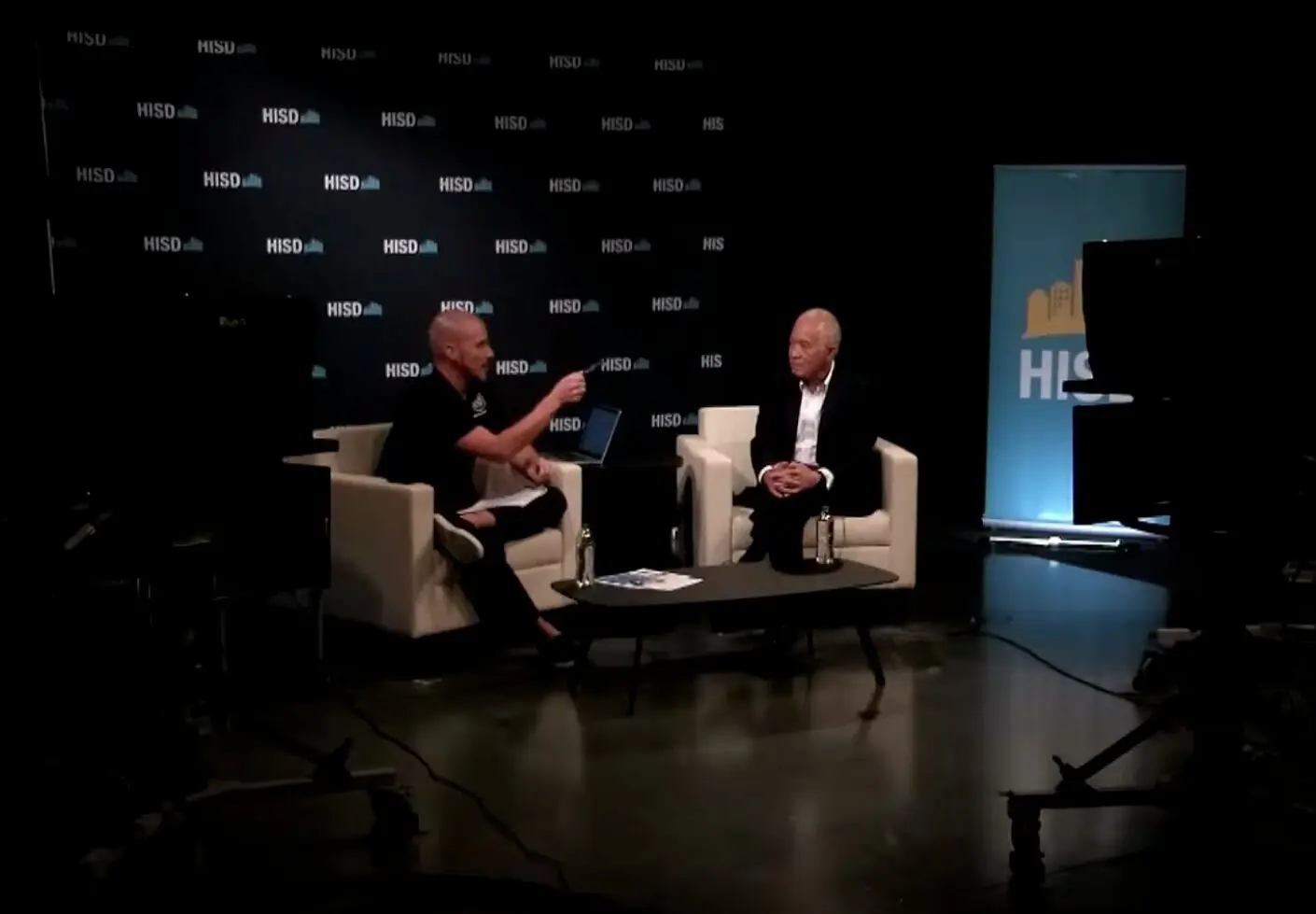
In a virtual question-and-answer session, Miles said the program will emphasize skills such as decision-making and problem-solving.
“What we’re trying to do in the Future 2, in the afternoon, is ensure that students have experiences and activities that will grow their year 2030 skills like decision-making, problem-solving,” Miles said.
HISD previously announced Clemente Martinez Elementary and Gregg Elementary as Future 2 campuses while closing 12 schools. The district said those two campuses will absorb students from closing schools.
The nine selected campuses serve predominantly low-income student populations, with most students identifying as Latino or Black. The schools include Bonham Elementary, Clemente Martinez Elementary, Gregg Elementary, Shadydale Elementary, Southmayd Elementary, Deady Middle School, Forest Brook Middle School, Hartman Middle School, and Sugar Grove Middle School.
According to the Texas Education Agency, the campuses carry a range of accountability ratings from A to D.
The district said Future 2 campuses will operate from 6:30 a.m. to 6 p.m. Students will have access to what HISD described as “Action Labs,” athletics, and music programs at no additional cost, and the schools will provide breakfast, lunch, and dinner.
Elected trustees, who currently serve in an advisory role under the state-appointed board of managers, said they have received limited information about the expansion.
Trustee Michael McDonough said families in his district have raised concerns about the pace of implementation and the lack of available details.
“There’s some real trepidation about the acceleration of [Future 2] and what does it really even mean?” McDonough said. “What if I don’t want to be a part of it? What are my options? And I don’t think those are very clear to [the public] right now.”
McDonough said he supports innovation but questioned the funding and rollout timeline, saying rapid expansion could create implementation challenges that affect students.