
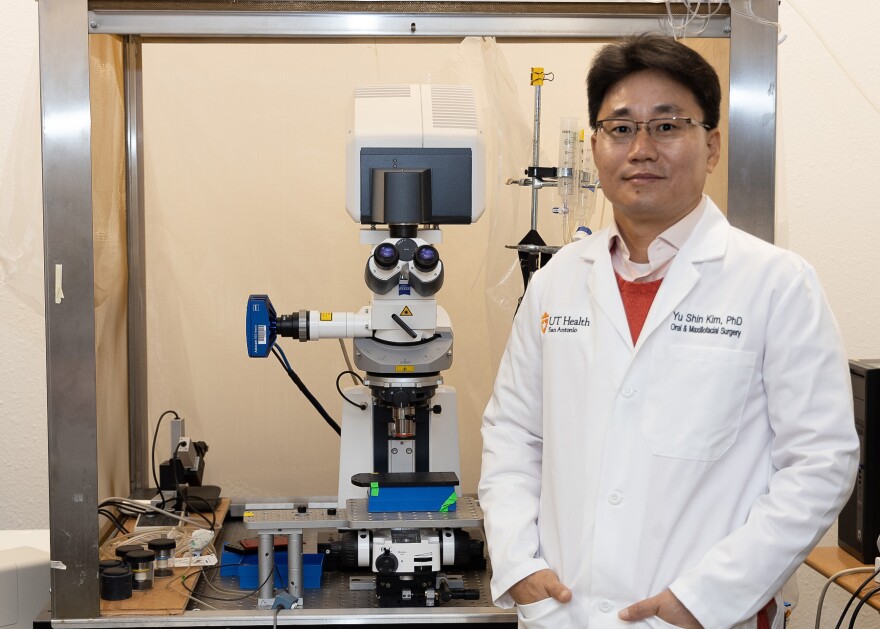
SAN ANTONIO — A study led by researchers at the UT Health San Antonio School of Dentistry has identified a biological mechanism involving immune cells that may contribute to migraine pain, according to associate professor Yu Shin Kim.
Kim, who works in the Department of Oral & Maxillofacial Surgery, said migraine pain may serve as an indicator of underlying physiological stress in the body.
He said stress can increase levels of a molecule called PACAP38 in the bloodstream. Researchers linked elevated PACAP38 levels to migraine attacks.
Kim’s team identified a receptor on mast cells, called MrgprB2, that binds with PACAP38. Mast cells are immune cells located in connective tissue, including the dura mater, a membrane that surrounds the brain and spinal cord.
According to the study, the binding of PACAP38 to the receptor triggers mast cells to release inflammatory chemicals into the bloodstream, which is associated with migraine pain.
The researchers said the findings may support future efforts to develop treatments that target the receptor to prevent migraine symptoms.
Kim said the research team is working on developing a small-molecule compound that could block the receptor and reduce migraine-related pain.