
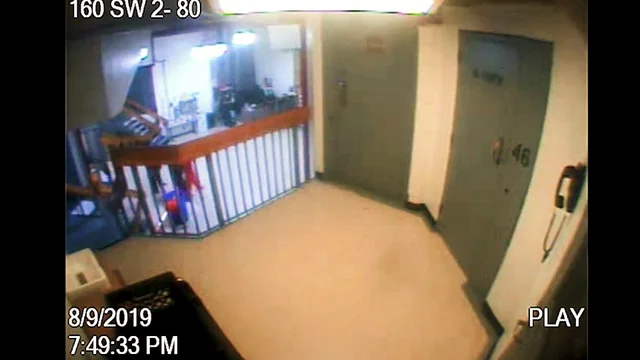
A newly released set of Epstein-related records states that a one-minute gap in surveillance footage from the Metropolitan Correctional Center (MCC) in Manhattan resulted from a routine digital recording process rather than manual deletion or tampering.
The documents are part of a broader batch of files made public in recent days, including internal memoranda, technical logs and incident reports describing how security systems functioned in the Special Housing Unit where Jeffrey Epstein was held. They also outline how jail staff preserved and produced video following his death in August 2019.
The missing segment appears near midnight in footage captured by a camera positioned close to Epstein’s cell. Earlier public releases of the video showed a brief interruption, prompting speculation about potential malfunction or concealment of events.
According to the newly available material, the gap occurred when the jail’s digital recording system automatically transitioned between files. The process, described as a buffer or indexing function, briefly stopped one recording before immediately starting another. Documentation indicates the camera itself did not shut off, but the system created two separate video segments with a short time-code jump.
Technical logs show the facility used continuous digital recording stored on hard drives with periodic backups. Scheduled maintenance tasks included file segmentation and indexing at set times. Records specify the missing minute was not manually deleted and that no user override took place.
Internal emails and reports reveal staff identified the irregularity while preparing footage for investigators after Epstein’s death. Technicians extracted the video, reviewed timestamps and produced copies for the FBI and Department of Justice, noting the gap and describing it as a common artifact of the system’s file management.
Federal investigators sought clarification during their evidence review. In response, jail officials and contracted technicians provided system manuals, configuration notes and logs explaining how the recorder handled indexing and folder changes. The documents state that similar brief gaps appeared at other times on the system when file boundaries shifted, though those instances were unrelated to Epstein’s unit.
Investigators also compared footage from multiple cameras to confirm continuity. Records report that overlapping views showed no unexplained gaps during the same period, with hallway activity, staff rounds and cell-front movement aligning before and after the interruption.
The files are part of ongoing releases tied to civil litigation, criminal investigations and public records requests related to Epstein. They include correspondence between jail administrators and federal authorities, communications with technical contractors and references to internal policies.
Documents addressing the video gap note no change in Epstein’s housing status or monitoring level at the time. They cite routine overnight staffing, standard cell checks and normal camera operations, while also referencing earlier concerns about video preservation involving separate incidents and dates.
Officials state the one-minute interruption did not represent lost evidence but instead reflected a system-generated time-code break, adding technical context to the public record surrounding conditions at the MCC on the night of Epstein’s death.