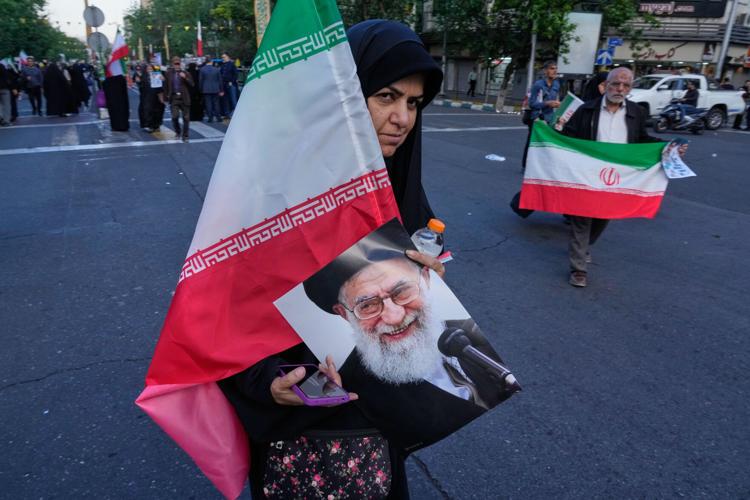
DUBAI, United Arab Emirates — Iran’s supreme leader on Thursday vowed to continue defending the country’s nuclear and missile programs, escalating already high tensions with the United States amid ongoing military and diplomatic pressure over the region’s security and energy routes.
In remarks read on state television, Ayatollah Ali Khamenei said Iran would not abandon its strategic capabilities and issued defiant language toward the United States, saying Americans “belong at the bottom” of the Persian Gulf.
Khamenei, who has not been seen publicly since the outbreak of the conflict, framed Iran’s military and technological programs — including nuclear and ballistic missile development — as central to national identity and sovereignty.
“Ninety million proud and honorable Iranians… regard all of Iran’s identity-based, spiritual, human, scientific, industrial and technological capacities… as national,” he said.
His comments come as Iran faces mounting economic strain, including pressure on its oil exports and disruptions to shipping through the Strait of Hormuz, a critical global energy corridor.
The United States, under President Donald Trump, has pursued a strategy aimed at restricting Iran’s oil exports and limiting its nuclear capabilities, including maritime enforcement measures targeting Iranian shipping. A senior administration official said the U.S. is also working with allies on a coordinated framework to ensure continued access to international shipping lanes.
A State Department cable circulated this week urged U.S. diplomats to seek support for a “maritime freedom construct” designed to safeguard navigation in the Strait of Hormuz and counter what Washington described as Iranian interference in maritime traffic.
Oil markets reacted sharply to the ongoing tensions, with Brent crude briefly rising above $120 a barrel amid concerns over supply disruptions.
Iran has also signaled it intends to maintain control over the Strait of Hormuz, which it says falls within its territorial waters alongside Oman. Gulf Arab states and Western governments consider the waterway an international passage open to commercial shipping without restriction.
Meanwhile, diplomatic efforts to ease tensions continue, with Pakistan reporting that it is facilitating indirect talks between Washington and Tehran, though no breakthrough has been announced.