
MANILA, Philippines — Cardinal Pablo Virgilio David on Friday questioned whether the US-backed Pax Silica initiative would strengthen the Philippines’ scientific and industrial capabilities, as concerns grow over its potential demands on the country’s land, water, energy and labor.
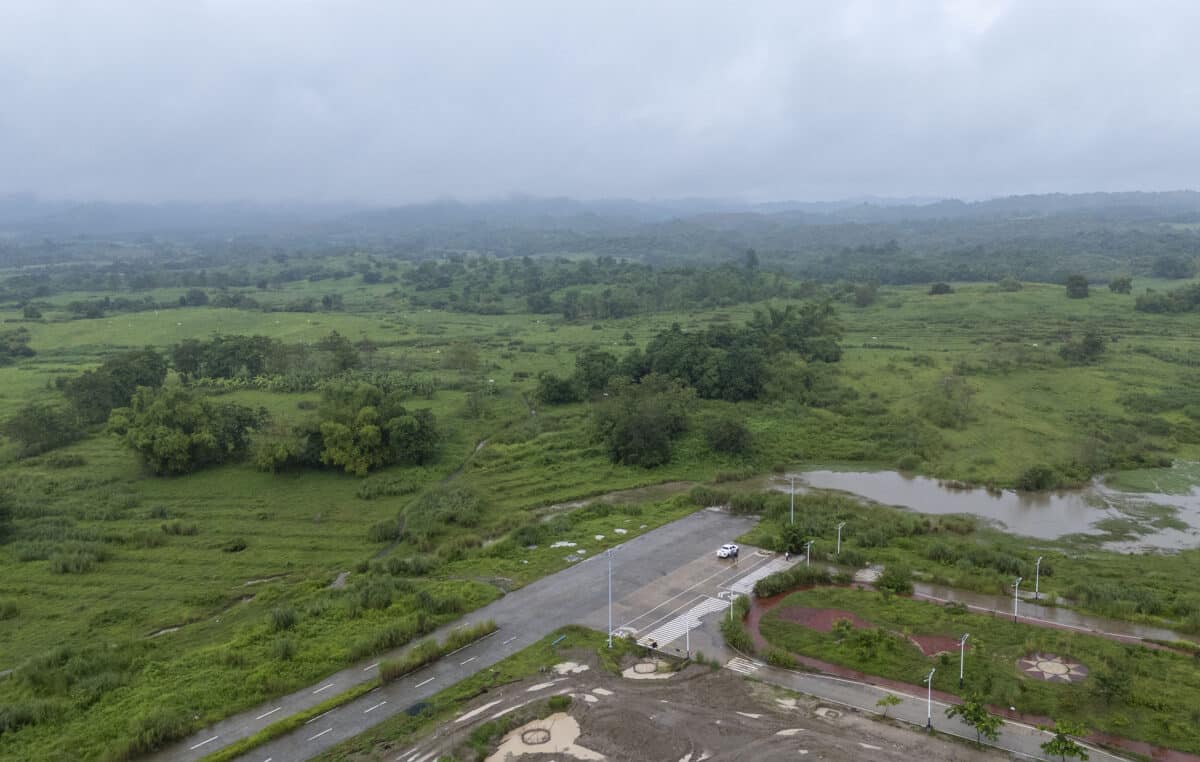
David said the issue was not whether the United States was pursuing its own strategic interests but whether the Philippines would gain enough from the initiative, which aims to establish a semiconductor and artificial intelligence hub on a 1,620-hectare site in New Clark City in Capas, Tarlac.
“Will Pax Silica help build Filipino scientific capability, technological innovation, and industrial resilience? Or will it primarily serve the strategic interests of others while Filipinos provide the land, natural resources, water, energy, tax incentives, and labor?” David said in a Facebook post Friday.
“These are legitimate questions — not because we oppose foreign investment, but because genuine partnership should strengthen the nation that hosts it,” he added.
The proposed project has drawn criticism over its projected requirements for water and electricity. Inquirer data scientist Dr. Alicor Panao said the initiative could create a significant energy challenge because AI infrastructure requires a substantial and reliable power supply, while the Philippines has less electricity capacity than other countries.
The Unyon ng Manggagawa sa Agrikultura also warned that the project could accelerate land conversion in Central Luzon, threaten food security and expose nearby communities to environmental risks.
President Ferdinand Marcos Jr., however, said in his fifth State of the Nation Address that Pax Silica would create quality jobs, improve the country’s competitiveness through an AI-focused industrial hub and contribute to economic growth.
David said the Catholic Church’s concern extends beyond the project’s economic and technological benefits.
He cited Pope Leo XIV’s reminder that society must consider not only what artificial intelligence can do but also what kind of people it is helping humanity become. He also cited Pope Francis’ call for a future not driven solely by competition among national interests.
“The ultimate question, therefore, is simply whether Pax Silica will make economies stronger or artificial intelligence more powerful,” David said. “The real question is whether it will help build what Pope Leo calls a civilization of love rather than a culture of power.”
David also questioned the meaning behind the initiative’s name, noting that “pax” is Latin for peace while “silica” refers to a key material used in semiconductor technology.
In another Facebook post Saturday, he said artificial intelligence could advance medicine, education, scientific research, environmental protection and economic development but could also facilitate disinformation, cyberattacks, autonomous weapons, mass surveillance, political manipulation and warfare.
David said the Catholic Church does not oppose scientific and technological advancement but maintains that such progress should serve people and promote the common good.
“A genuine Pax Silica will not be fulfilled by silicon alone,” he said, adding that the digital revolution should prioritize truth, dialogue, cooperation, justice and peace.