
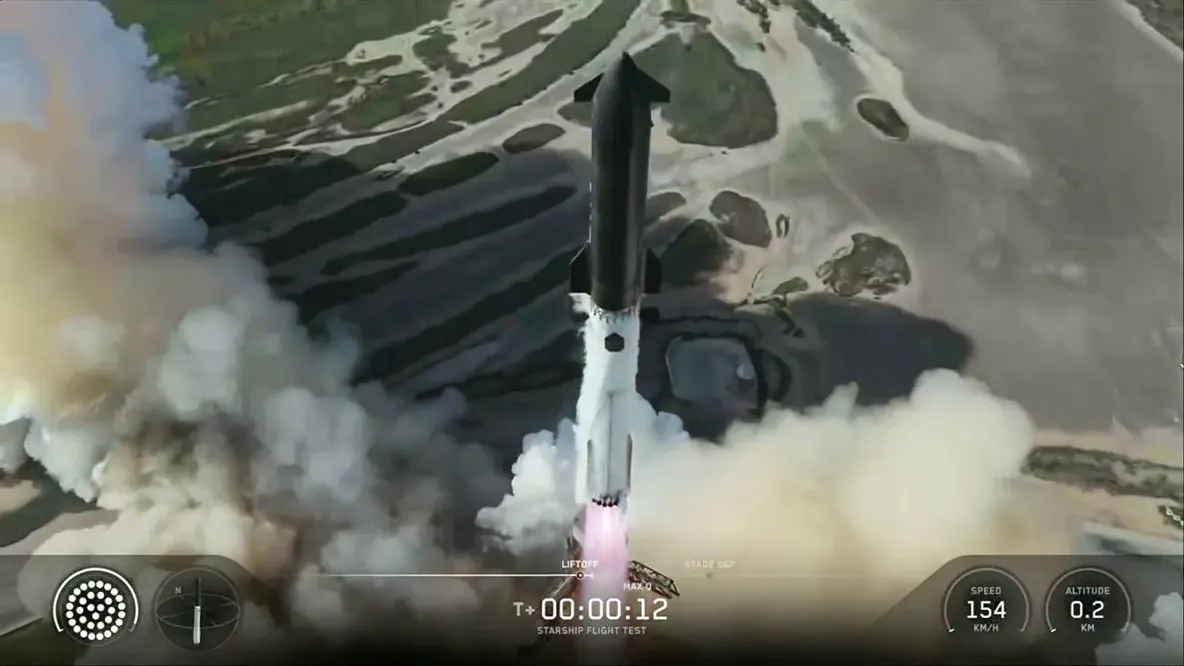
STARBASE, Texas — SpaceX launched its Starship rocket from Starbase, Texas, on Friday, completing the spacecraft’s 13th test flight after a one-day delay caused by poor visibility.
The company postponed Thursday’s planned launch because of weather conditions affecting visibility. An earlier launch attempt last week was also scrubbed after several engines failed to ignite before liftoff, according to SpaceX founder Elon Musk.
The latest test flight focused on evaluating the performance of the Super Heavy booster during launch, stage separation, boostback burn and landing burn. SpaceX said it modified the booster’s hardware to improve engine relight reliability following issues encountered during the previous flight.
For the first time, Starship deployed 20 Starlink satellites during a test mission. The company also aimed to successfully relight an engine in space before conducting a controlled reentry, descent and splashdown in the Indian Ocean. Engineers continued testing improvements to the spacecraft’s heat shield.
During the previous test flight, SpaceX reported that differences in engine startup caused the Super Heavy booster to rotate 90 degrees off its intended orientation during its directional flip. Several engines also failed to restart, causing the boostback burn to end early.
The Federal Aviation Administration attributed the earlier booster problems to heat effects on propulsion system components during ascent and incorrect engine alarm settings. SpaceX said it addressed those issues before Friday’s launch.
Starship also experienced an engine failure during its previous flight but remained on its planned trajectory despite the malfunction.