
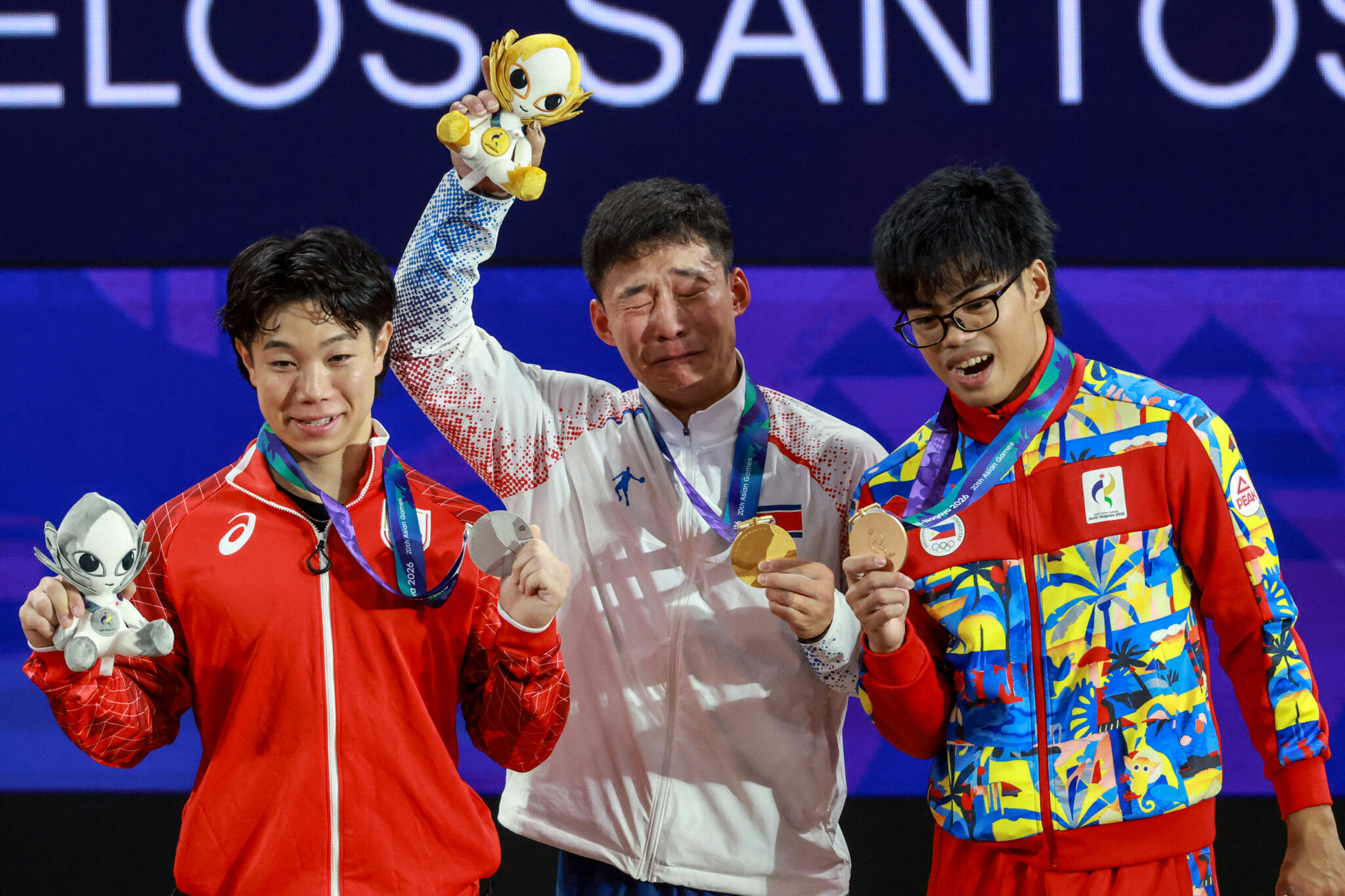
NAGOYA, Japan — North Korea’s weightlifters have won four gold medals and two silvers while setting seven world records at the Aichi-Nagoya Asian Games, strengthening their bid for a return to the Olympics at Los Angeles 2028.
North Korea has dominated international weightlifting since returning from a self-imposed COVID-19 isolation, winning six gold medals and setting six world records at the 2023 Asian Games in Hangzhou, China.
The country’s weightlifters have continued that run in Nagoya, collecting six medals from the first six events of the seven-day competition as of Friday.
Ri Song Gum opened North Korea’s medal haul with gold in the women’s 49-kilogram class while setting three world records.
The 28-year-old said she would consider moving up to 53 kilograms, the lowest women’s weight category at the 2028 Olympics, as she seeks the only major title missing from her collection.
Compatriot Kang Hyon Gong won the women’s 53kg gold several hours later.
Oh Kwang Ok added another gold Friday in the women’s 57kg class and set three world records.
“The Olympic Games in 2028 is my target,” Oh told AFP. “I will try my best to win gold in Los Angeles. The world records are not enough.”
North Korea’s Olympic return
North Korea skipped the Tokyo Olympics after the country closed its borders during the COVID-19 pandemic. The country also missed Olympic weightlifting at Paris 2024 because it could not qualify after the 2023 Asian Games.
Since then, North Korean lifters have dominated major international competitions, particularly in the lighter weight categories.
North Korea won 45 medals, including 26 golds, at the 2024 world championships in Manama, Bahrain. China finished second with 14 gold medals.
North Korea again topped the medal standings at last year’s world championships in Norway with 17 gold medals.
Shreyas Reddy, a North Korea analyst at NK News, said the country treats sports as a tool for promoting its political system and concentrates limited resources on events where athletes can develop through structured training.
Reddy said North Korean coaches identify children with physical attributes suited for weightlifting and provide them with intensive training and nutritional support.
Despite the team’s international success, North Korean athletes appeared at the Asian Games in older team vests and tracksuits that they have used for years.
Reddy said North Korea prioritizes nutrition and allocates limited resources toward sports where officials believe the country has the strongest chance of success.
Doping scrutiny
North Korea’s rapid rise since the pandemic has also drawn attention to its anti-doping record.
The World Anti-Doping Agency lifted its non-compliant restrictions on North Korea in January 2024 after authorities resumed testing missions in the country.
The International Testing Agency conducted out-of-competition testing inside North Korea the following month for the first time in four years.
North Korean athletes now face international-standard testing, while team officials attribute their results to training and effort.
“Our athletes put in so much hard work,” North Korean weightlifting team manager Jang Song Nam told AFP. “Every gold medal is payback for our hardship over four years (of Covid isolation). We are world leaders now.”