
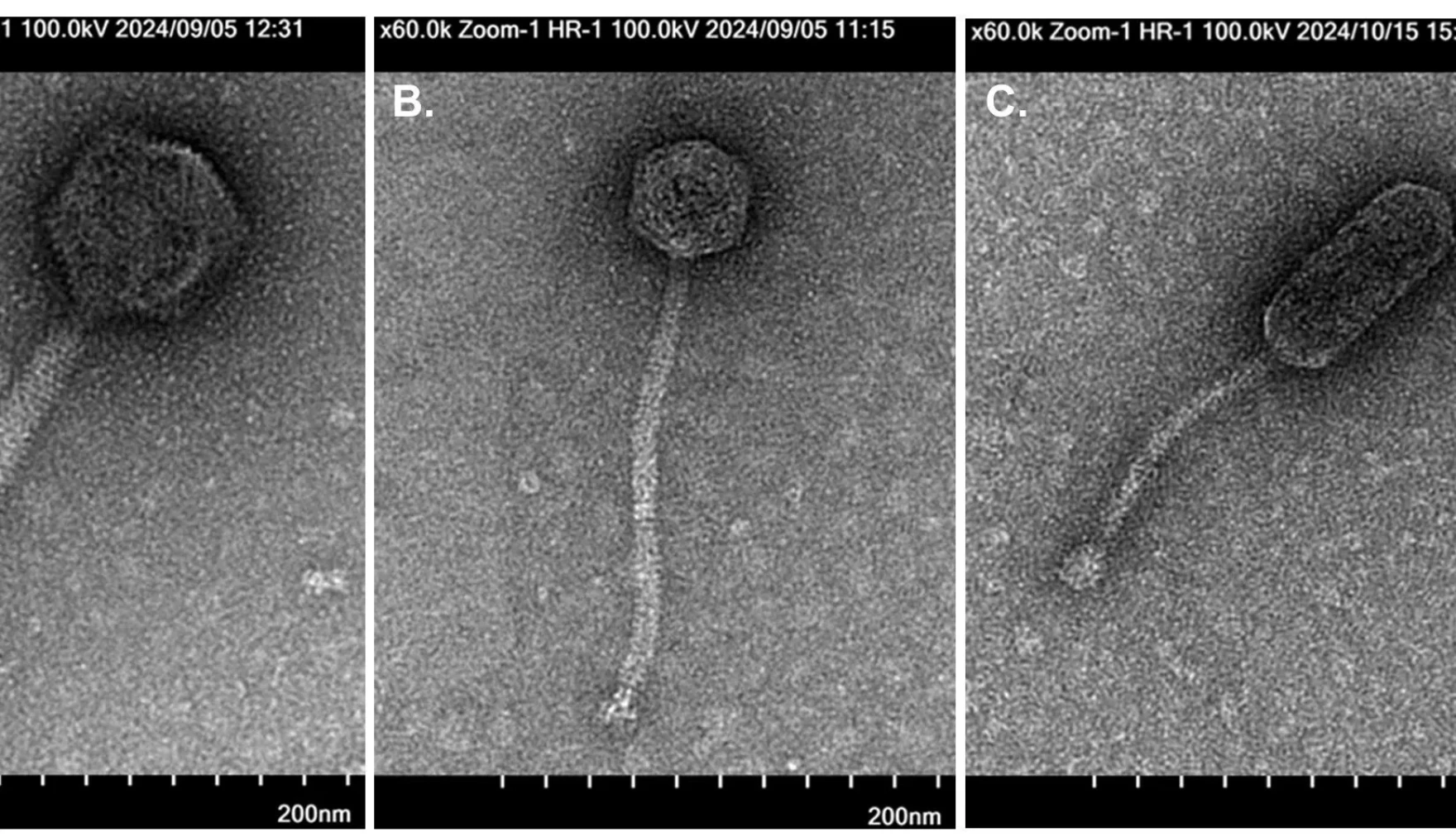
SAN ANTONIO — Researchers at the Naval Medical Research Unit San Antonio (NAMRU-SA) have identified 14 new bacteria-eating viruses, or bacteriophages, that could help combat antibiotic-resistant infections, including those linked to failed root canals.
The newly discovered phages were given Texas-inspired names, including AllMyExes, Riverwalk, Revolver, Alamo, LoneStar, TwoStep, Vaquero, PricklyPear, TexasRanger, Haystack, RioGrande, Stockyards, Pumpjack and GiddyUp.
Microbiologist Yoon Hwang, who led the research, said the names were chosen to reflect local culture rather than the traditional Latin-based scientific naming convention.
Bacteriophages, commonly called phages, are viruses that infect and destroy specific bacteria while leaving human cells unharmed. Researchers view them as a promising alternative or supplement to antibiotics as antimicrobial resistance continues to rise worldwide.
The NAMRU-SA team focused on Enterococcus faecalis, a bacterium commonly associated with failed root canals and increasingly resistant to multiple antibiotics. The bacterium can also cause urinary tract, bloodstream and heart valve infections.
Researchers collected wastewater samples from treatment plants in Austin, Arlington and Laredo, where they isolated and sequenced the genomes of the 14 previously unknown phages, including one entirely new species.
A study published in Microbiology Resource Announcements in 2025 documented the discoveries, while a follow-up paper in PLOS ONE found that many of the phages effectively eliminated E. faecalis. The findings suggest the viruses could eventually be used in dental treatments and other therapies targeting antibiotic-resistant infections.
The research was supported by the U.S. Navy, which is interested in improving treatment for dental infections that can sideline service members during deployments.
Hwang said one limitation of phage therapy is that each virus typically targets only a specific type of bacteria. To address that challenge, his team has also engineered phages capable of delivering antimicrobial peptides that can kill additional bacterial species near the infection site.
Researchers said the discoveries add to growing efforts to develop phage therapy as a new tool against drug-resistant bacteria, although additional research and clinical testing will be needed before the treatment can be widely used.