
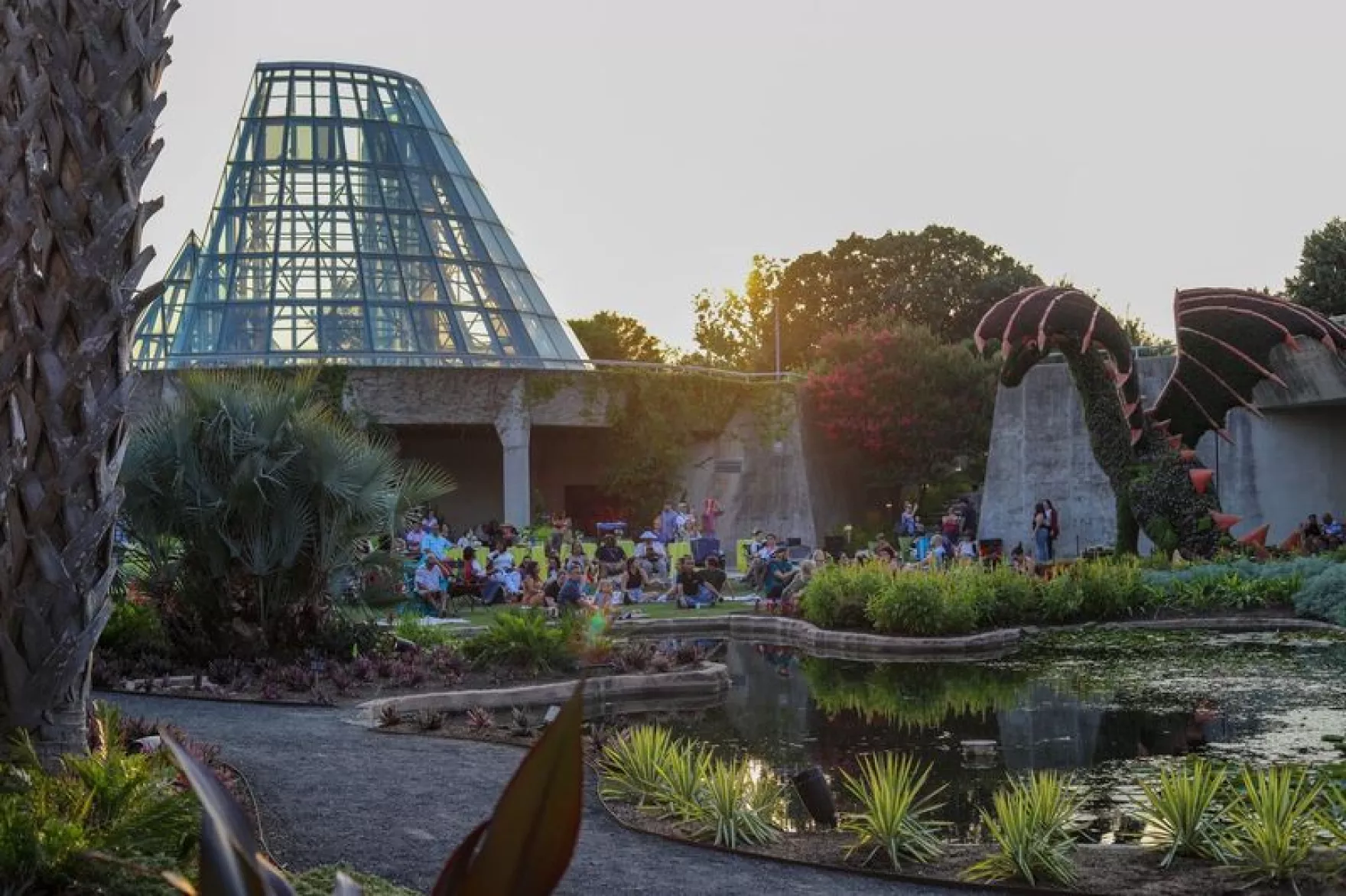
SAN ANTONIO — The San Antonio Botanical Garden defended its public funding as city officials consider eliminating its annual subsidy to help address a projected $158 million budget shortfall.
Mayor Gina Ortiz Jones proposed ending the Garden’s annual city allocation during a recent City Council budget meeting, arguing that organizations that generate revenue through admission fees should rely less on public funding.
“We’re reducing our funding from $1.2 million to $1 million. They charge a ticket fee. They have an event called ‘Bubbles and Blooms.’ They’ll be okay. If you charge a ticket fee, then you can figure it out,” Jones said. “If we’re talking about cutting nutrition centers, we’re not going to fund the botanical gardens.”
The proposed city budget currently recommends reducing the Garden’s funding by $200,000. City officials will continue budget discussions before adopting a final spending plan in September.
San Antonio Botanical Garden President and CEO Katherine Trumble said the organization expected a reduction in city funding but not the complete elimination of the subsidy.
“We understand that there’s going to be cuts,” Trumble said. “It’s more the nature of that being a cut versus going down to zero.”
The Botanical Garden has operated as a nonprofit since 2019 after transitioning from city management. Trumble said city funding accounted for nearly 30% of the Garden’s budget before the transition and has declined to about 7% this year under a long-term sustainability plan.
According to Trumble, the city’s annual contribution helps support educational and accessibility programs that admission revenue does not fully fund.
The Garden reported welcoming a record 430,000 visitors last year, compared with about 170,000 visitors before it became a nonprofit.
Trumble said the Garden expects about 50,000 people to participate in its accessibility programs this year.
The Garden said city funding supports reduced-cost admission through the Museums for All program, community memberships, transportation through its Nature Navigator shuttle, free admission passes distributed through community organizations, student field trips, nutrition and wellness programs, and services for people living with dementia and aphasia.
Since becoming a nonprofit, annual student visits have increased from about 10,000 to 32,000, according to the Garden. It said 61% of those students attend Title I schools. Participation in the Museums for All program has also grown from fewer than 900 participants during its first year to nearly 4,900 this year.
City leaders are expected to continue budget deliberations over the next several months before approving the fiscal year budget in September.