
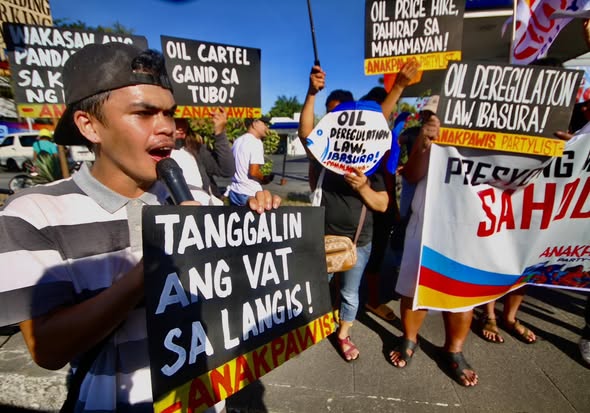
MANILA, Philippines — The country’s largest labor group has urged Ferdinand Marcos Jr. to use emergency powers under the oil deregulation law to stabilize fuel prices, as another round of double-digit increases looms this week.
The Trade Union Congress of the Philippines (TUCP) called on the President to invoke Section 14(e) of Downstream Oil Industry Deregulation Act of 1998, which allows the government to temporarily take over or direct the operations of oil industry players during a national emergency.
TUCP President and Deputy Speaker Raymond Democrito Mendoza said the measure could help protect Filipino consumers from surging fuel costs driven by global events.
“When a conflict thousands of kilometers away suddenly dictates how much a Filipino family eats, rides, and pays for their needs, that is no longer just a global crisis—it becomes a national emergency at home,” Mendoza said.
Under the law, the Department of Energy (Philippines) could require oil companies to disclose supply inventories and acquisition costs during an emergency, a move the labor group says would help ensure transparency in pricing.
House backs fuel excise suspension
Meanwhile, the House of Representatives of the Philippines on Monday approved on third and final reading a measure allowing the President to suspend fuel excise taxes to cushion consumers from rising oil prices.
Lawmakers voted 247-3 to pass House Bill No. 8418, which would amend the National Internal Revenue Code of the Philippines to allow the temporary suspension of the tax if the average price of Dubai crude reaches $80 per barrel for at least one month and a national emergency or calamity is declared.
Push for biofuel imports
The President also certified as urgent a proposal to amend the Biofuels Act of 2006 to allow temporary importation of biofuel components to help ease fuel price pressures.
The measure, Senate Bill No. 1965, was filed by Senators Jinggoy Estrada and Pia Cayetano. If enacted, it would permit the importation of bioethanol and biodiesel for up to a year if blended fuel prices exceed pure fuel prices by at least 5 percent.
Oil supply concerns
Fuel price pressures have intensified since the outbreak of the Iran war on Feb. 28, which disrupted global energy supply and triggered volatility in international oil markets.
The government is also exploring ways to expand biofuel use. Currently, liquid fuels sold nationwide must contain a 3-percent bioethanol blend, under existing law.
Industry group Philippine Biodiesel Association said producers are capable of increasing the biodiesel blend to 7 percent, which could help cushion consumers from further spikes in imported fuel prices.
The country remains under a state of national calamity until November under Proclamation No. 155, which allows authorities to impose price freezes on basic commodities and prevent profiteering. However, under the deregulation law, the government cannot directly set fuel price caps, leaving oil companies to adjust pump prices based on global crude costs, exchange rates, and transport expenses.