
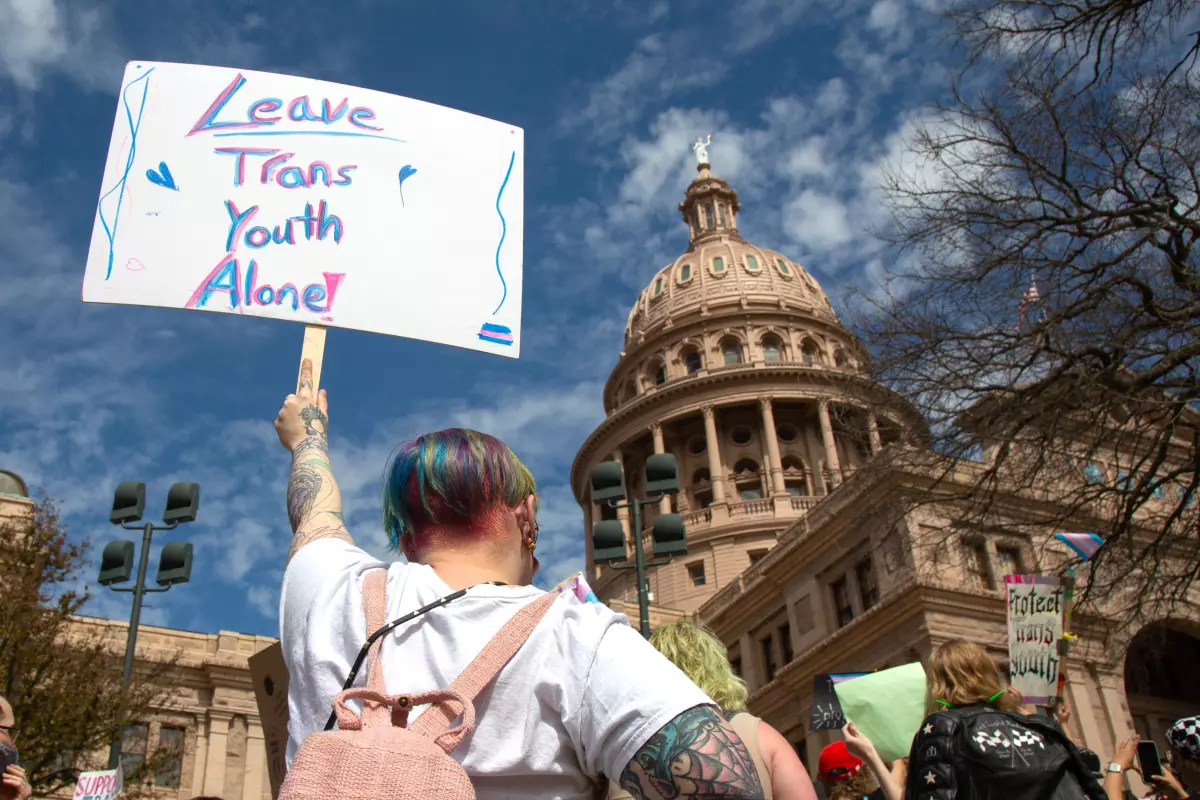
AUSTIN, Texas — The Texas Supreme Court on Friday dismissed a lawsuit challenging state investigations into families with transgender children, ruling that the cases no longer present an active dispute because most investigations have ended and the children involved are no longer minors.
The court said the Department of Family and Protective Services is no longer actively investigating the families, removing the basis for the claims raised in the 2022 lawsuits.
Plaintiffs argued the case should continue, stating the agency could reopen investigations if court injunctions were lifted. The court rejected that argument, calling concerns about future investigations speculative.
In a joint statement, Lambda Legal, the American Civil Liberties Union, the ACLU of Texas, and PFLAG said the ruling addresses procedure and does not determine whether the investigations were lawful. The groups said the agency previously argued it had no reason to pursue new cases because gender-affirming care for minors is no longer permitted under state law.
In 2022, Greg Abbott directed DFPS to follow an opinion from the state attorney general that classified gender-affirming care for minors as unlawful and required investigations into families with children receiving such care. Lawmakers later enacted a ban on gender-affirming care for minors, which took effect in September 2023.
Families, including parents identified in court filings as Mary Doe’s guardians and others with transgender children, filed lawsuits against the state, along with psychologist Megan Mooney. The plaintiffs argued the agency acted beyond its authority and violated constitutional and procedural requirements. A trial court issued injunctions blocking the investigations.
The state said it has permanently closed investigations into three of the four families and will not reopen cases involving previously reviewed allegations. The court noted the remaining case involving Mary Doe cannot proceed because she is now an adult and outside the agency’s jurisdiction.
The court also ruled it lacks jurisdiction over Mooney’s claims that reporting requirements could expose her to penalties or professional consequences, stating her concerns are hypothetical and do not establish legal standing.
In a concurring opinion, Chief Justice Jimmy Blacklock wrote that he believes Mooney may have standing for some claims but agreed the injunctions should be lifted following the state’s ban on gender-affirming care for minors.
The ruling ends the case at the state level.