
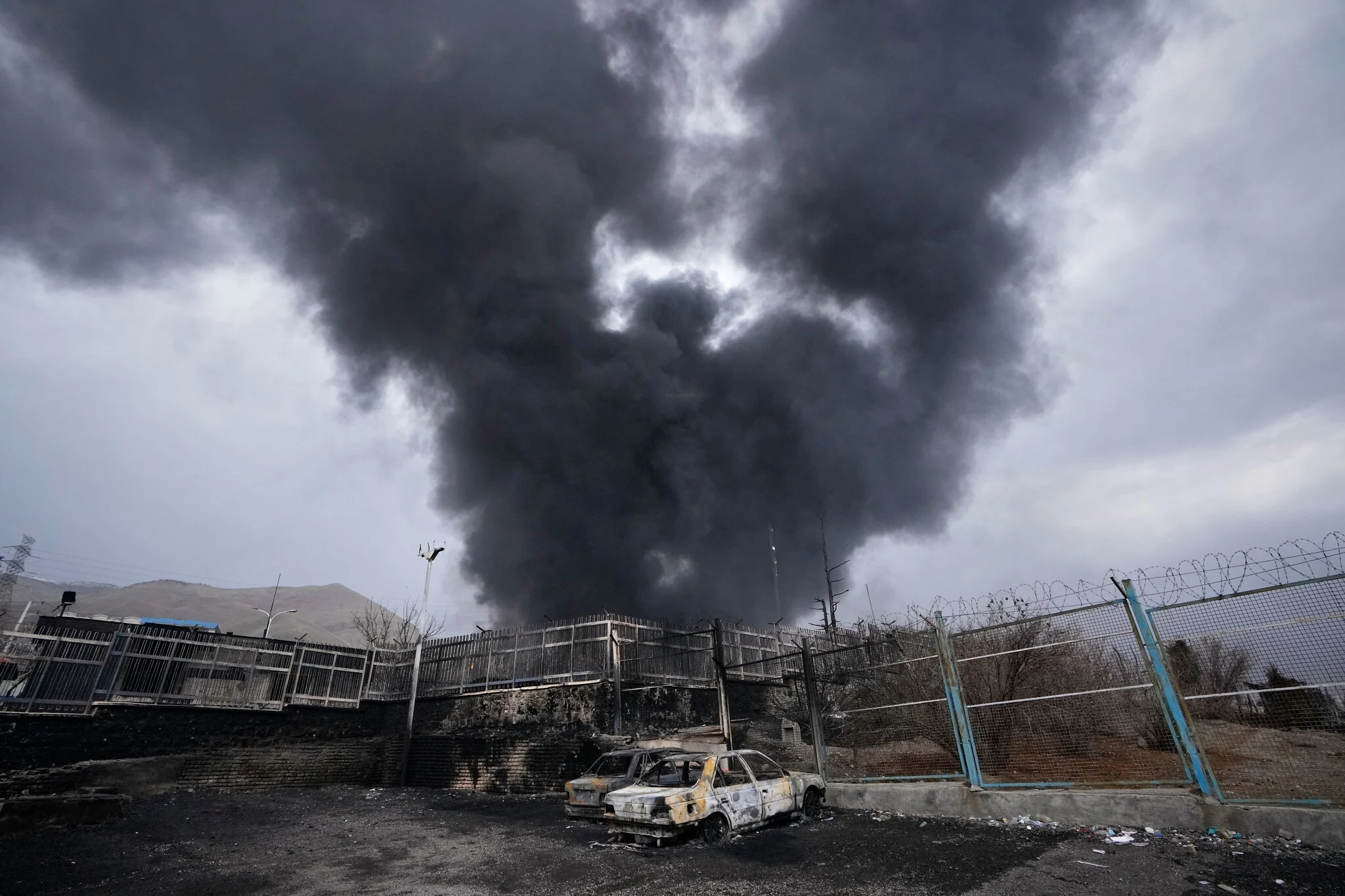
DUBAI, United Arab Emirates — Iran launched new missile and drone strikes on Tuesday targeting Israel and Gulf Arab countries, intensifying a Middle East conflict that began with joint U.S. and Israeli actions on Feb. 28. The attacks have disrupted oil flows, sent prices surging, and alarmed global markets.
In Dubai, sirens warned of incoming missiles, while Bahrain reported an Iranian strike on a residential building, killing a 29-year-old woman and wounding eight others. Saudi Arabia intercepted two drones over its eastern oil-producing region, and Kuwait shot down six drones. Explosions were also reported in Tel Aviv and Jerusalem as Israel’s defense systems intercepted Iranian fire.
Iranian officials, including parliament speaker Mohammad Bagher Qalibaf and security official Ali Larijani, issued defiant messages toward Israel and U.S. President Donald Trump, signaling no interest in a ceasefire.
The attacks have targeted energy infrastructure and shipping routes through the Strait of Hormuz, a critical waterway for global oil trade. Brent crude briefly spiked to nearly $120 a barrel before stabilizing around $90, nearly 24% above pre-conflict levels. Iran’s Revolutionary Guard declared it would block oil exports to hostile nations until further notice. Saudi Aramco said tankers were being rerouted via the East-West pipeline to the Red Sea.
Regional and global implications
The conflict has spread beyond Iran and Israel, with Hezbollah in Lebanon firing missiles at Israel, and Iran-backed militias in Iraq launching attacks on U.S. bases. An airstrike on the 40th Brigade of Iraq’s Popular Mobilization Forces killed at least five militiamen and wounded four. Israel has called on residents of southern Lebanon to evacuate in anticipation of further operations.
Since Feb. 28, officials report at least 1,230 deaths in Iran, 397 in Lebanon, and 11 in Israel, along with seven U.S. service members killed.
Humanitarian developments
Amid the turmoil, five members of the Iranian women’s national soccer team who were in Australia for the Women’s Asian Cup were granted asylum. The team had faced the prospect of returning to Iran while the conflict escalated, prompting Home Affairs Minister Tony Burke to finalize humanitarian visas for the five players, with asylum offers extended to the remaining squad members.
The ongoing conflict has disrupted shipping, energy markets, and regional stability, with world leaders monitoring developments closely.