
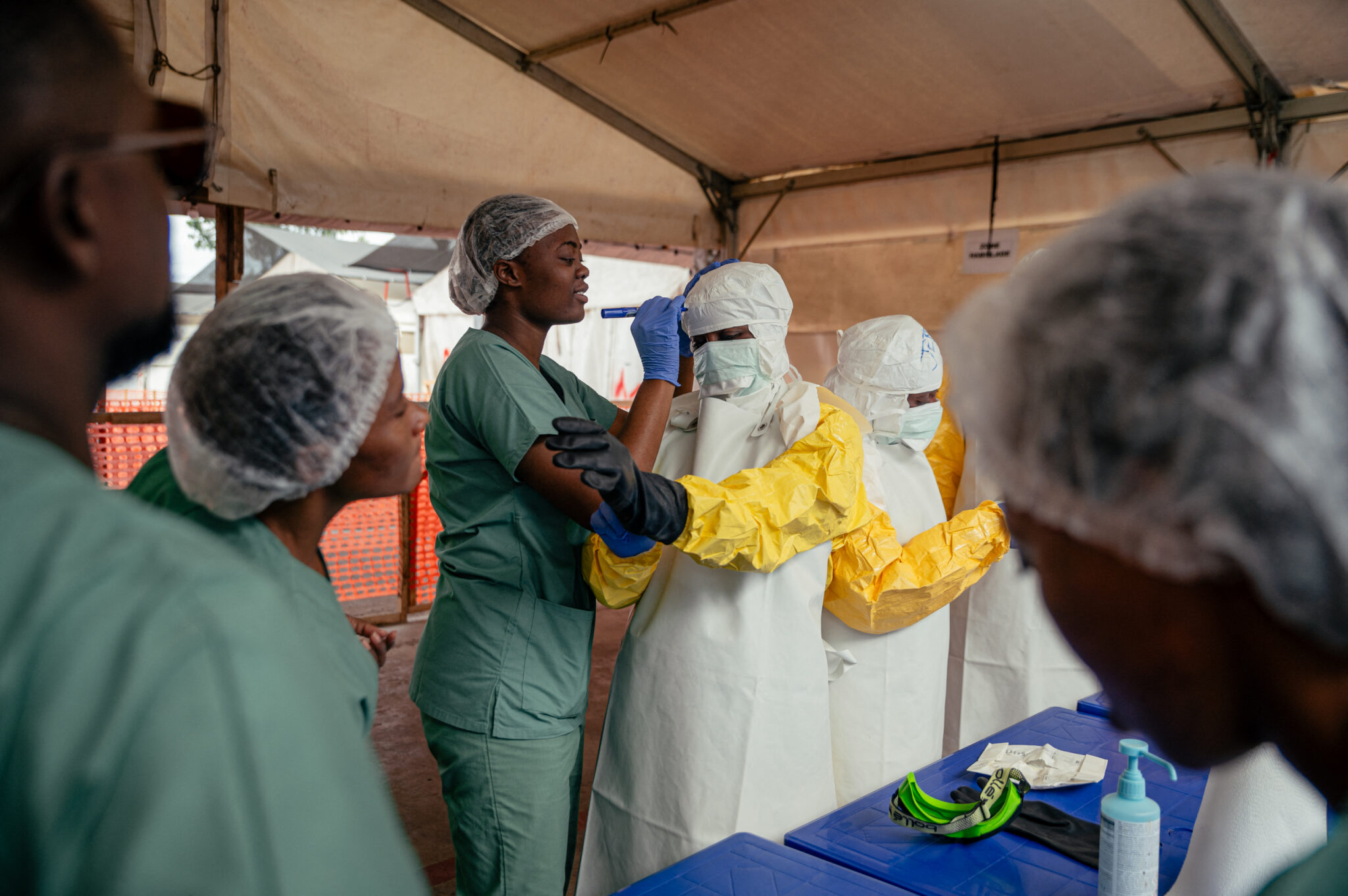
GENEVA, Switzerland — The Ebola outbreak in the Democratic Republic of Congo has killed 600 people and infected 1,759 others since it was declared in mid-May, the World Health Organization (WHO) reported on Thursday.
The updated figures showed that the outbreak in the Democratic Republic of Congo had caused 600 confirmed deaths among 1,759 confirmed cases.
In neighboring Uganda, two people have died from Ebola, while 17 of the country’s 20 confirmed patients have recovered.
WHO representative to the Democratic Republic of Congo Anne Ancia said the outbreak continues to spread.
“The outbreak continues to expand, and its true scale has not yet been fully established,” Ancia said Tuesday.
Data from Congolese health authorities showed a case fatality rate of 34 percent. Health officials reported that 285 patients had recovered, while 304 suspected cases remained under investigation.
The outbreak has affected four provinces in northeastern Democratic Republic of Congo, with most cases concentrated in Ituri province.
Health authorities identified the Bundibugyo strain of Ebola as the cause of the outbreak. No approved vaccines or treatments currently exist for this strain.
Researchers began a clinical trial on July 2 to evaluate two potential treatments: the monoclonal antibody MBP134 and the antiviral drug remdesivir. The study is assessing the effectiveness of each treatment alone and in combination.
Ebola spreads through close contact with infected individuals and exposure to infected bodily fluids.
Ancia said transmission remains active and described the outbreak as being in an expansion phase.
“It is still in the expansion phase, unfortunately. We would like to say it is stabilising, but frankly we cannot say it yet,” she said. “Transmission is still ongoing.”
Speaking from Bunia, the capital of Ituri province, Ancia said population displacement, insecurity and a fragile health system continued to hinder containment efforts.
“Population movements, persistent insecurity, and the fragility of the health system continue to complicate efforts to bring the outbreak under control,” she said.
Ancia said humanitarian needs remain significant, including civilian protection, food access and health services, while other diseases such as malaria and measles continue to spread.
Health authorities have established 22 treatment centers with about 700 beds and are working to add 300 more. The facilities currently operate at about 90 percent capacity.
Officials are monitoring more than 10,000 contacts of infected individuals, with an 82 percent follow-up rate. The WHO said a 95 percent follow-up rate is needed to effectively control transmission.
Laboratory testing capacity has expanded from 30 tests per day in Kinshasa to more than 2,000 tests daily in laboratories located in affected provinces.
The WHO has appealed for $115 million to support the Ebola response and reported that 32 percent of the required funding has been received.
One of the affected provinces, South Kivu, has also experienced fighting between Congolese government forces and the Rwanda-backed M23 armed group.
On Thursday, United Nations High Commissioner for Human Rights Volker Türk called for an immediate end to the conflict, citing concerns about its impact on civilians and the risk of additional displacement within and beyond the country.