
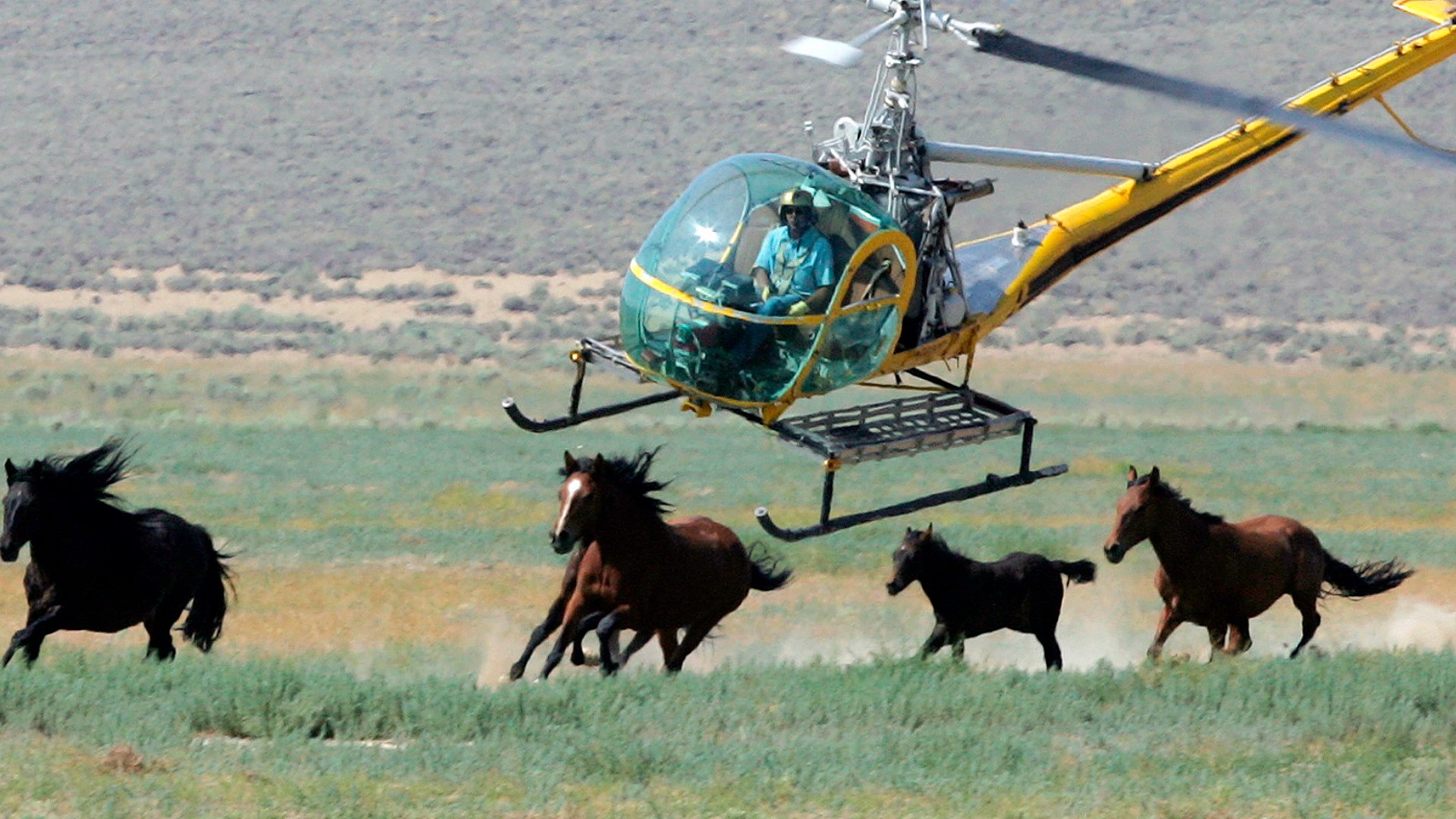
WASHINGTON — The U.S. Bureau of Land Management (BLM) plans to remove more than 14,000 wild horses across nine states, including Arizona, California, Colorado, Idaho, Montana, Nevada, New Mexico, Oregon, Utah, and Wyoming, from now through October to manage overpopulation.
In Colorado alone, over 1,100 horses will be corralled, according to reporting by The Colorado Sun. The BLM explains that, without natural predators, wild horse and burro populations can grow rapidly, overwhelming available food and water and causing long-lasting damage to public lands. Management efforts are intended to ensure that healthy horses and burros can thrive alongside healthy rangelands for generations to come.
This is not the first time the BLM has removed wild horses; in 2020, more than 100 horses were removed from Nevada due to lack of water and declining health. While such removals happen nearly every year, some animal advocates caution against the use of helicopters, which have previously caused injuries and fatalities. In 2023, nearly a dozen horses died during helicopter roundup operations.
Wild horses in the U.S. are largely descendants of domesticated horses, with genomic differences from ancestral horses that lived in Eurasia before domestication. Some ancestors arrived with Europeans in the late 15th and 16th centuries, but most modern wild horses in the Western United States are linked to breeds that escaped or were released from captivity in the 19th century. Herds can grow quickly, potentially doubling in size every four to five years, which can surpass the land’s capacity to sustain them, according to the BLM.