
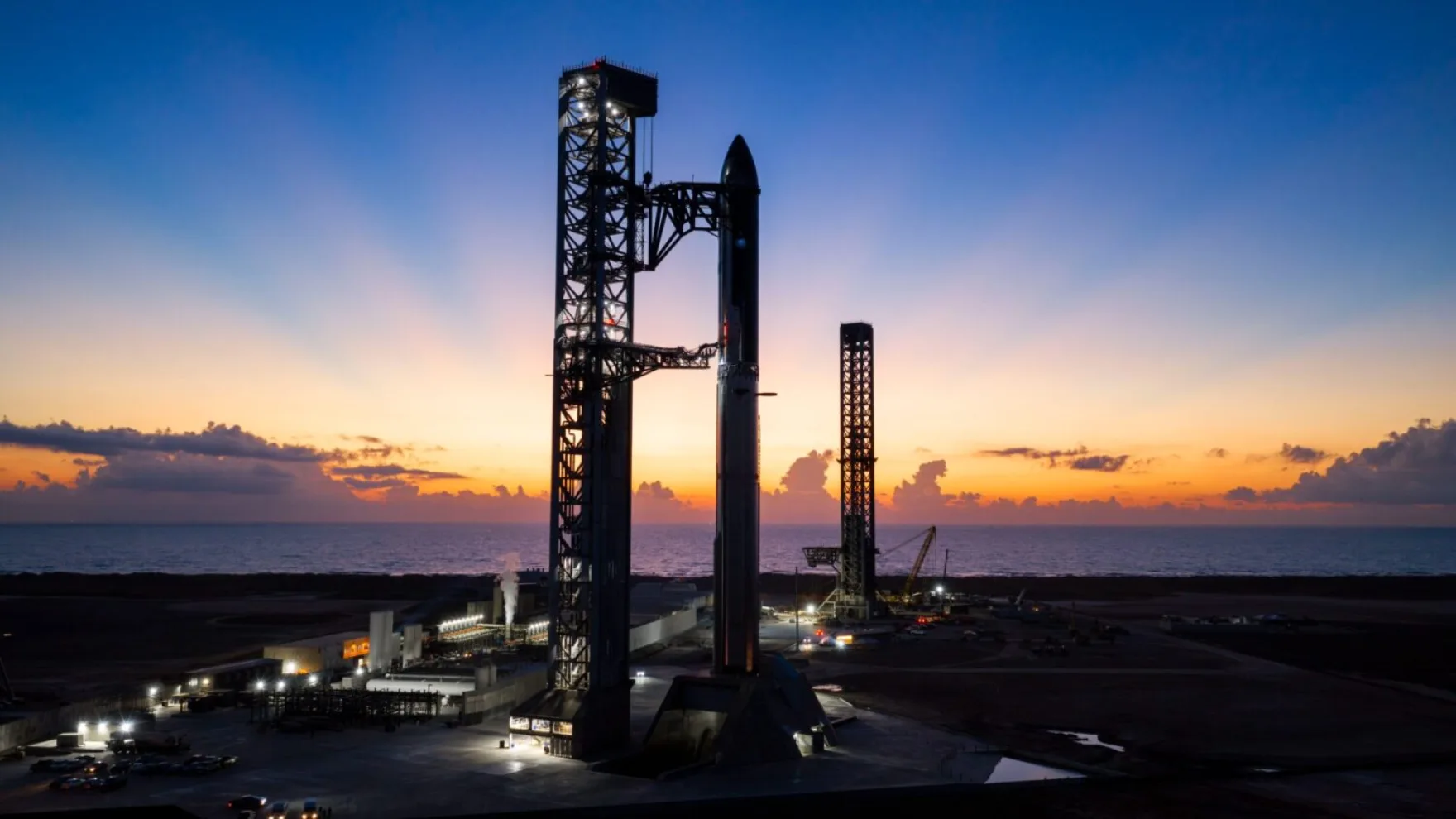
BROWNSVILLE, Texas — SpaceX plans to launch Starship 14 as early as Monday, Sept. 28, in a mission that could send the massive spacecraft into Earth orbit for the first time and test technology intended for future lunar missions.
SpaceX has set a launch opportunity starting at 7:15 a.m. from Starbase in South Texas near Brownsville. The window will remain open until about 8:30 a.m., according to the company.
SpaceX completed a launch rehearsal Thursday and awaits regulatory approval from the Federal Aviation Administration.
The company plans to stream the launch through its X account and website.
Starship 14’s flight
Starship consists of two major stages: the upper-stage spacecraft and the Super Heavy booster. SpaceX describes the fully reusable vehicle as the tallest and most powerful rocket ever built.
Starship 14 will attempt to deploy operational Starlink satellites after the previous July mission demonstrated the spacecraft’s ability to release satellites.
The vehicle is expected to reach an altitude of about 170 miles and complete six orbits around Earth during a roughly 10-hour flight.
About 2½ minutes after liftoff, the Starship upper stage will separate from the Super Heavy booster. SpaceX expects the booster to land in the Gulf of Mexico after the separation.
The company said it addressed problems that caused the booster to make a hard water landing during the July mission.
The upper stage will fire its engines and enter Earth orbit less than 30 minutes into the flight. Once in orbit, Starship will deploy 26 Starlink satellites before completing six trips around the planet.
About nine hours into the mission, Starship will begin its return to Earth and land in the Pacific Ocean off the coast of Chile.
Implications for NASA’s Artemis missions
A successful orbital mission could provide an important test for SpaceX’s plans to use Starship for future human spaceflight and lunar missions.
NASA has contracted SpaceX to develop a lunar landing system for its Artemis program, which aims to return astronauts to the moon for the first time in more than five decades. NASA expects to spend more than $4 billion on SpaceX’s lunar lander, according to a report from the agency’s Office of Inspector General.
SpaceX plans to develop a crewed version of Starship to transport astronauts to the lunar surface and support the development of a U.S. moon base.
NASA initially planned to use Artemis III to return astronauts to the moon. Delays affecting SpaceX and Blue Origin led NASA to revise the mission, with Artemis III now expected to test one or both companies’ lunar landers in low Earth orbit.
Artemis IV could use one of those landers, depending on which system meets NASA’s requirements. The mission is currently expected in early 2028.