
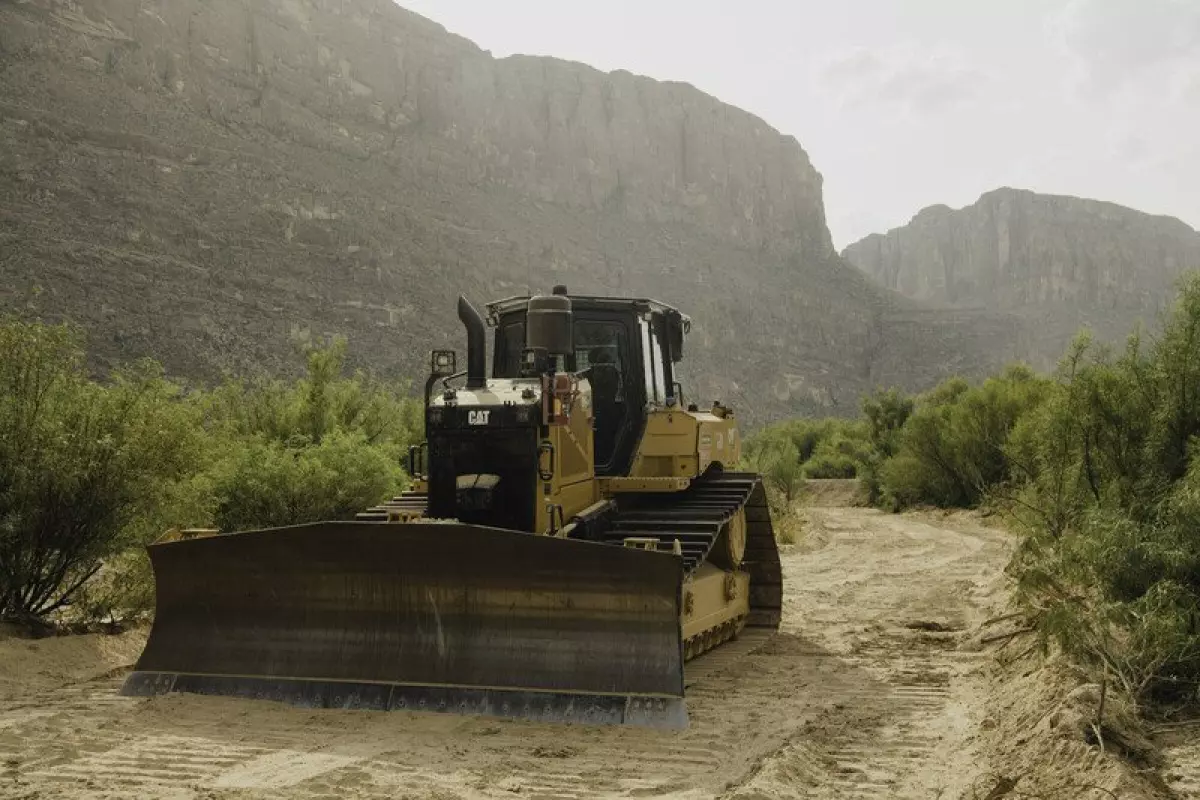
WASHINGTON — U.S. Sen. John Cornyn is urging federal officials to meet with Big Bend residents, local leaders and landowners before moving ahead with additional border barriers in the region, where crews have started preparing parts of Big Bend National Park for a border security project.
In a letter Friday to Homeland Security Secretary Markwayne Mullin, the Texas Republican said border sheriffs, county judges, private landowners and park advocates have raised concerns about the Trump administration’s plans.
Cornyn said he supports stronger border security but wants the Department of Homeland Security to hear directly from people who live and work in the region before construction proceeds in state and national parks.
“The requests from local officials and community leaders for coordination and communication appear very reasonable to me,” Cornyn wrote. He asked Mullin or his representatives to meet with Texas stakeholders before proceeding with additional physical barriers.
The Trump administration has spent months preparing for the projects. In February, then-Homeland Security Secretary Kristi Noem waived federal environmental, historic preservation and other requirements to accelerate construction of border barriers and roads across the region.
The administration plans to build about 175 miles of 30-foot steel wall through parts of Hudspeth, Jeff Davis and Presidio counties.
In June, DHS issued another waiver covering more than 100 miles of the border, including all of Big Bend National Park and part of Big Bend Ranch State Park.
Inside Big Bend National Park, U.S. Customs and Border Protection plans to install vehicle barriers and surveillance technology and improve Border Patrol roads. The federal government awarded a $1.7 billion contract for the project earlier this year.
Crews have since brought heavy equipment into the park and started work near the Rio Grande. CBP has said some of the activity involves preliminary work, including road repairs.
Cornyn said residents have questioned the need for physical barriers in an area where mountains, deserts, steep canyons and other terrain already make border crossings difficult.
“My constituents believe that the 1,000-foot riverbank cliffs and remote Big Bend terrain offers its own source of deterrence for any illegal migrants crossing into the United States,” Cornyn wrote.
Residents have also raised concerns that the projects could damage the landscape and wildlife, affect culturally significant Native American sites, disrupt wildlife migration, restrict access to the Rio Grande and hurt tourism.
The plans have drawn opposition from local officials and residents across party lines. Five border county sheriffs have spoken against the projects, while more than 2,000 people gathered at the Texas Capitol in April to protest the proposed border wall.
Local county judges have also asked federal officials for more information about the projects.
The federal plans face a separate legal challenge from a local river guide, the Friends of the Ruidosa Church and the Center for Biological Diversity. The lawsuit initially challenged proposed 30-foot walls elsewhere in the region and has since expanded to include the Big Bend National Park project.