
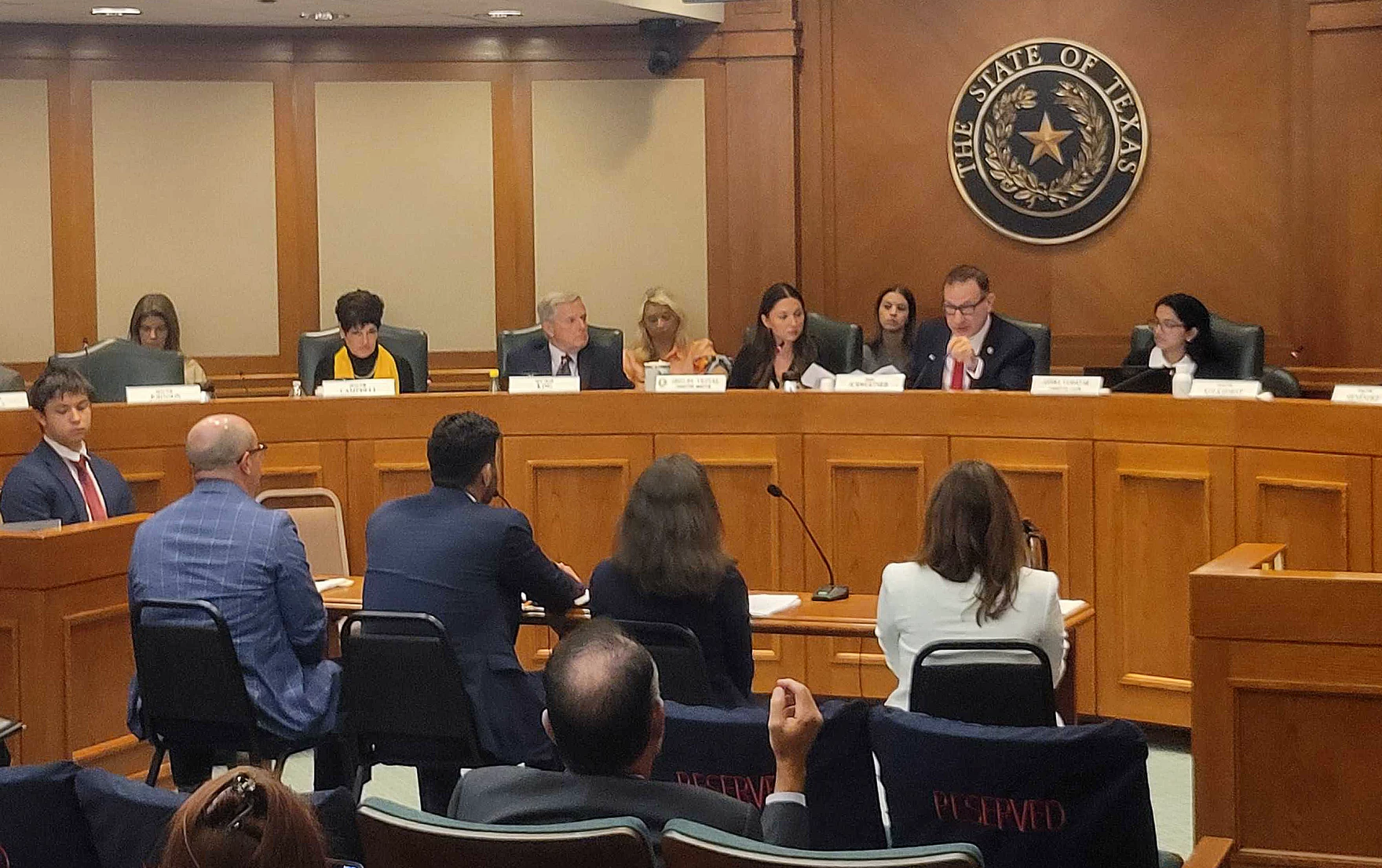
AUSTIN — Opponents of Texas’ proposed ultra-high-voltage transmission lines raised concerns over land use, renewable energy and data center growth during a 15-hour state Capitol hearing that stretched into early Thursday, while state regulators and grid officials defended the projects as necessary to maintain reliability.
More than 200 people attended the hearing Wednesday, with most speakers opposing the proposed transmission projects.
The first phase of the larger network, known as the Permian Basin Reliability Plan, would build three 765-kilovolt transmission lines connecting Central Texas with West Texas. Officials say the system would move electricity more efficiently and help meet growing demand, particularly from the oil and gas industry.
The proposed lines would stand up to 160 feet tall and require rights of way about 200 feet wide.
Thomas Gleason, executive director of the Public Utility Commission of Texas, told lawmakers that several smaller transmission lines would require more total land than the proposed ultra-high-voltage lines.
“765 is fewer lines,” Gleason said. “While each line requires more right of way, in totality, it’s actually less right of way.”
Electric Reliability Council of Texas Chief Operating Officer Woody Rickerson warned that existing infrastructure could face damage if the state does not expand its transmission capacity.
State Sen. Kevin Sparks asked Rickerson how soon the Permian Basin could face rolling blackouts without additional transmission.
“We think next year is a possibility,” Rickerson said.
Landowners along the proposed routes said the projects would disrupt ranches, watersheds and local economies.
Jeannie Dullnig, whose Hill Country ranch would be crossed by the proposed Howard-Solstice line, said the project could affect a watershed along four miles of the Nueces River.
Other landowners questioned why Texas should move electricity across rural communities when some of the power is generated closer to where it will be consumed.
Critics also argued that expanded transmission could encourage more wind and solar development and support additional data centers in rural areas.
State Sen. Sparks said the lines could carry more electricity from renewable energy projects, while some opponents questioned the reliability of renewable generation and battery storage compared with natural gas plants.
Nine state senators and 34 state representatives signed an amicus brief urging a pause in the transmission projects. The Texas Public Policy Foundation, which opposes much of the state’s renewable energy expansion, prepared the brief.
The proposed transmission network also drew criticism from some Republican lawmakers over the oil and gas industry’s role in driving electricity demand in West Texas.
State Sen. Donna Campbell questioned why oil and gas companies could not generate more electricity in the region instead of relying on transmission infrastructure funded through the broader electric system.
Committee Chair Charles Schwertner defended the concept of a shared power grid, saying public utilities provide broader benefits by allowing electricity and other essential services to move across communities.
Under current rules, the Public Utility Commission of Texas has until the end of August to decide the route for the first segment of the plan, the southern Howard-Solstice line.