
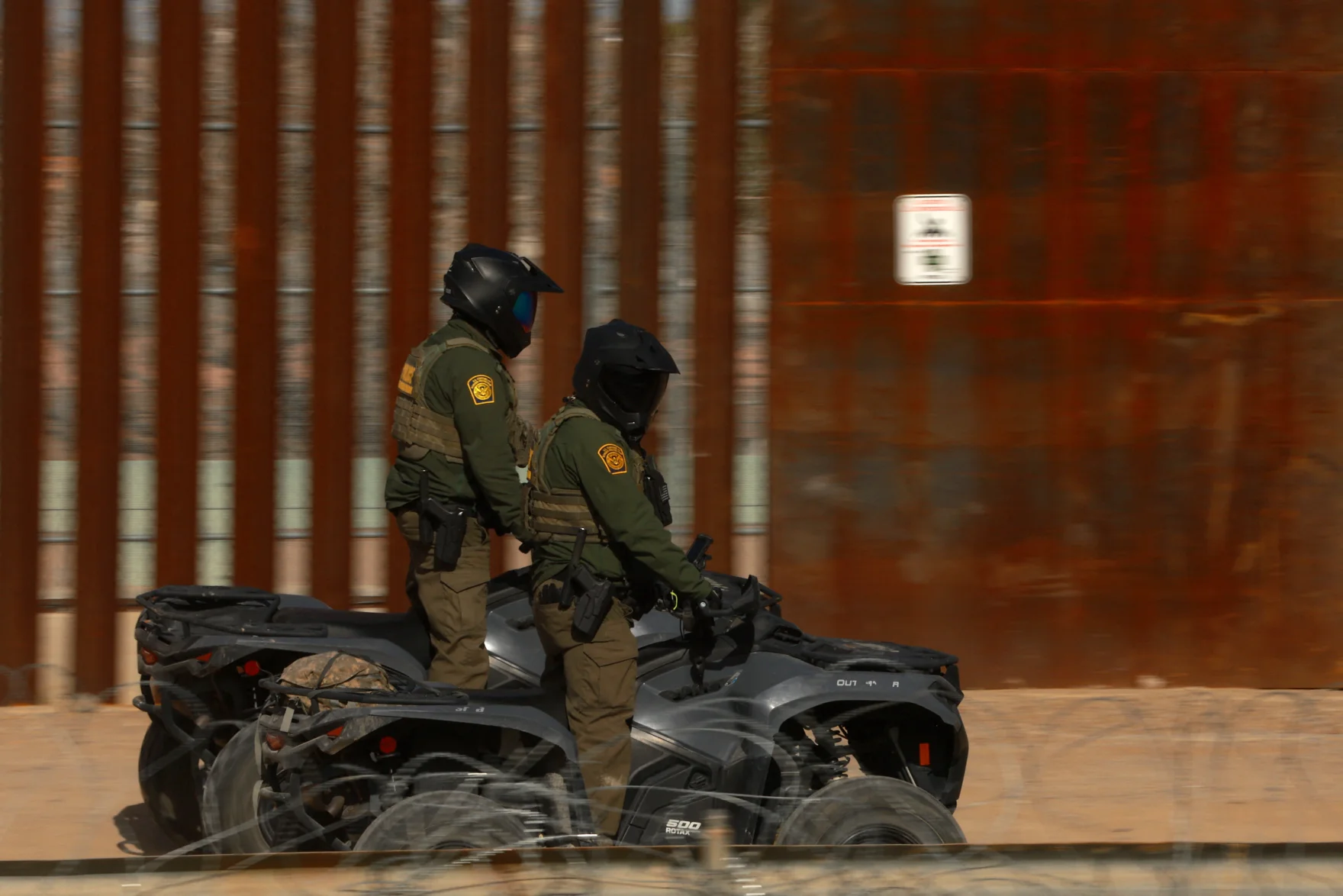
RIO GRANDE VALLEY, Texas — U.S. service members assigned to Joint Task Force-Southern Border used the Army Multipurpose High Energy Laser system late Aug. 25 and early Aug. 26 to disable three commercial drones in the Rio Grande Valley.
U.S. Northern Command stated that the unmanned aircraft supported cartel networks and posed a direct physical threat to military and U.S. Customs and Border Protection personnel. Officials did not identify specific operators or a named criminal group.
Mexico’s Defense Ministry reported that the encounter occurred within U.S. sovereign territory and identified the aircraft as commercial-style drones that migrant smugglers used to monitor border authorities.
Criminal organizations along the southern border employ commercial drones for surveillance, drug trafficking, and human smuggling coordination. Official reports recorded more than 27,000 drone incursions near the U.S.-Mexico border in 2024, with most activity occurring at night.
Groups across Latin America adapt commercial units—often purchased for $600 to $1,200—for surveillance, territorial control, and attacks. Specialized operators, known as “droneros,” assist these networks. In Michoacán and Jalisco, the Jalisco New Generation Cartel uses modified drones carrying improvised explosives against rival organizations, security forces, and civilians.
Political sociologist Rodrigo Peña stated that criminal technological advances consistently drive government policy changes, increased punitive measures, and shifts in political language regarding force projection. Peña added that counter-drone laser operations alter traditional frameworks of national sovereignty, creating distinctions between intelligence-sharing cooperation and direct military actions.
Security analysts distinguish between border surveillance operations and explosive drone deployments inside Mexico. Cartels use drones near the U.S. border primarily for intelligence gathering to aid narcotics, human, and weapons smuggling. No records indicate the use of weaponized cartel drones inside the United States.
The August interception occurred during ongoing bilateral security operations. Mexican and U.S. forces have conducted simultaneous “mirror operations” since February 2025 to patrol border sectors and share real-time intelligence aimed at disrupting weapons and drug shipments. Approximately 8,000 U.S. service members currently operate under Joint Task Force-Southern Border.
The Rio Grande Valley incident follows earlier operational problems involving military lasers in Texas. In February, the Federal Aviation Administration temporarily restricted airspace near El Paso over civilian flight safety concerns. In a separate incident near Fort Hancock, military personnel mistakenly disabled a Customs and Border Protection drone, leading to revised interagency coordination protocols among military units, aviation regulators, and federal law enforcement agencies.