
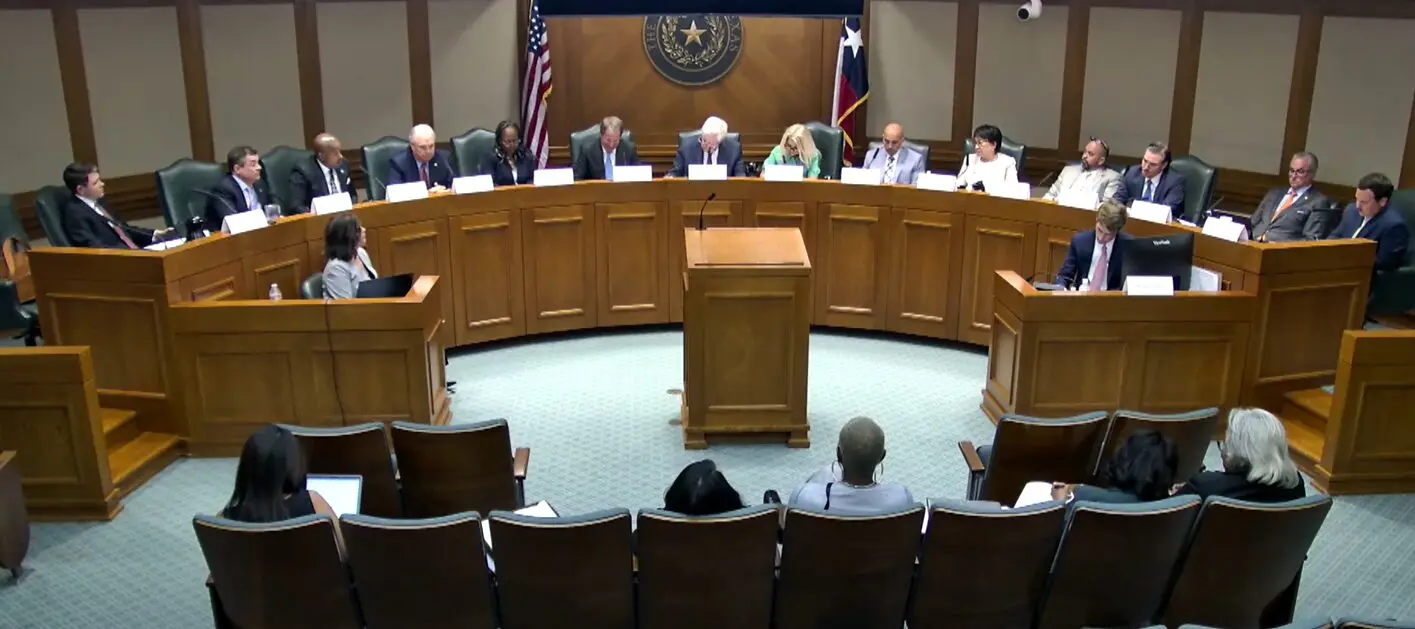
A Texas House committee voted Friday to impose nearly $422,000 in financial penalties on more than 50 Democratic lawmakers who left the state in August to block a congressional redistricting plan, enforcing fines and reimbursement costs after determining the members were absent without leave.
The Republican-led House Committee on House Administration approved the penalties in a 6–5 party-line vote after more than six hours of closed-door testimony. The committee assessed $303,000 in fines for absences during the first and second special sessions of the 89th Legislature and ordered $118,889.81 in reimbursement to the Texas Department of Public Safety for expenses incurred in efforts to compel the lawmakers’ return.
Under House rules, the penalized members cannot use political fundraising to pay the fines or associated costs. Each lawmaker faces more than $8,000 in personal liability.
Committee Chair Charlie Geren introduced the motion and read its terms without additional comment.
Democratic committee members objected to the penalties during closing statements before the vote. State Rep. Joe Moody said rising political tensions require caution in legislative actions. State Rep. Sheryl Cole said the process did not meet constitutional requirements for due process, including advance notice and an opportunity to respond. Cole proposed amendments to reduce or eliminate the penalties, but the committee rejected them along party lines.
The penalties stem from an August walkout by 52 Democratic House members who left Texas to deny the chamber a quorum. The lawmakers sought to block consideration of a mid-decade congressional redistricting plan supported by Republican leadership. The House could not conduct business during the quorum break.
Most of the Democratic members remained out of state from Aug. 2 to Aug. 17. They returned after officials in California announced a proposal to redraw congressional districts in that state. The Texas Legislature approved its redistricting plan shortly after the members returned.
In a statement issued after the vote, House Democratic Caucus Chair Gene Wu said the caucus is evaluating its response. He said any penalties must follow established procedures, including notice, transparency, and an opportunity for defense.
Several states have considered or adopted redistricting changes during the same period. The outcomes of those efforts remain unclear ahead of the 2026 midterm elections.