MANILA, Philippines — Meta Platforms Inc. has committed to removing harmful AI-generated deepfakes from its platforms and providing Philippine authorities with information to support investigations into cybercrime and online threats, officials said Friday.
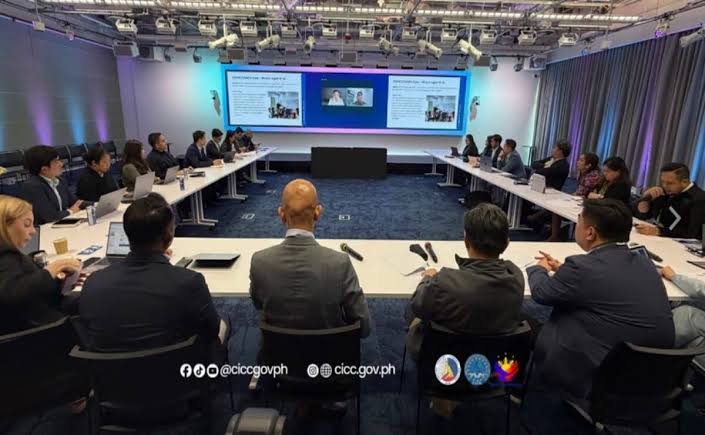
Philippine officials secured the commitments during a meeting with Meta policy representatives for the Asia-Pacific region Thursday in Singapore, where they discussed ways to address harmful online content and threats to public safety.
The delegation included Department of Information and Communications Technology Secretary Henry Aguda, National Bureau of Investigation Director Melvin Matibag, Laguna Rep. Ann Matibag and representatives from the office of Sen. Risa Hontiveros.
Hontiveros said Meta agreed to provide authorities with subscriber information and traffic data when the company identifies threats to children’s safety, including before an attack occurs.
The commitments include creating a technical working group with the Philippine government, appointing a dedicated point of contact for faster coordination and sharing relevant data when necessary, Aguda said.
Meta also agreed to continue cooperating with Philippine investigations involving imminent threats to children or risks of death or serious physical injury.
A Meta team plans to visit Manila in mid-September to formalize the framework and commitments reached in Singapore.
Hontiveros said the agreement could strengthen efforts to advance Senate Bill No. 2424, or the proposed Child Online Safety and Protection Act. The bill would set 16 as the minimum age for social media use and require platforms to protect minors from online risks.
Senate President Sherwin Gatchalian welcomed Meta’s commitments but said Congress would continue pursuing the proposed law.
Gatchalian said legislation would give Philippine authorities stronger mechanisms to hold social media companies accountable when they fail to address harmful content.
He cited the shooting at Ateneo de Zamboanga University earlier this month, when a video of the deadly incident remained on Facebook for about 14 minutes. The Cybercrime Investigation and Coordinating Center flagged the video and notified Meta before the platform removed it.
The CICC said Meta also agreed to provide relevant user data involving online sexual abuse and exploitation of children, child sexual abuse material, obscene content and other forms of online abuse, subject to legal requirements.
The agency said the NBI must issue a subpoena before Meta provides the requested data.
The talks also produced a mechanism for individuals targeted by AI-generated deepfakes to seek assistance in identifying and removing the content, the CICC said.
“This is an important step forward because it gives us a more preemptive layer of protection,” CICC Executive Director Renato Paraiso said.
The commitments come amid calls from some Philippine officials to impose stricter regulations on social media platforms after harmful content involving minors and videos of fatal shootings circulated online.
Paraiso said the new cooperation means banning Meta is “the last option” for now.
Meta’s Facebook remains the country’s most widely used social media platform, with 95.8 million users as of late 2025, according to figures cited by the CICC.