
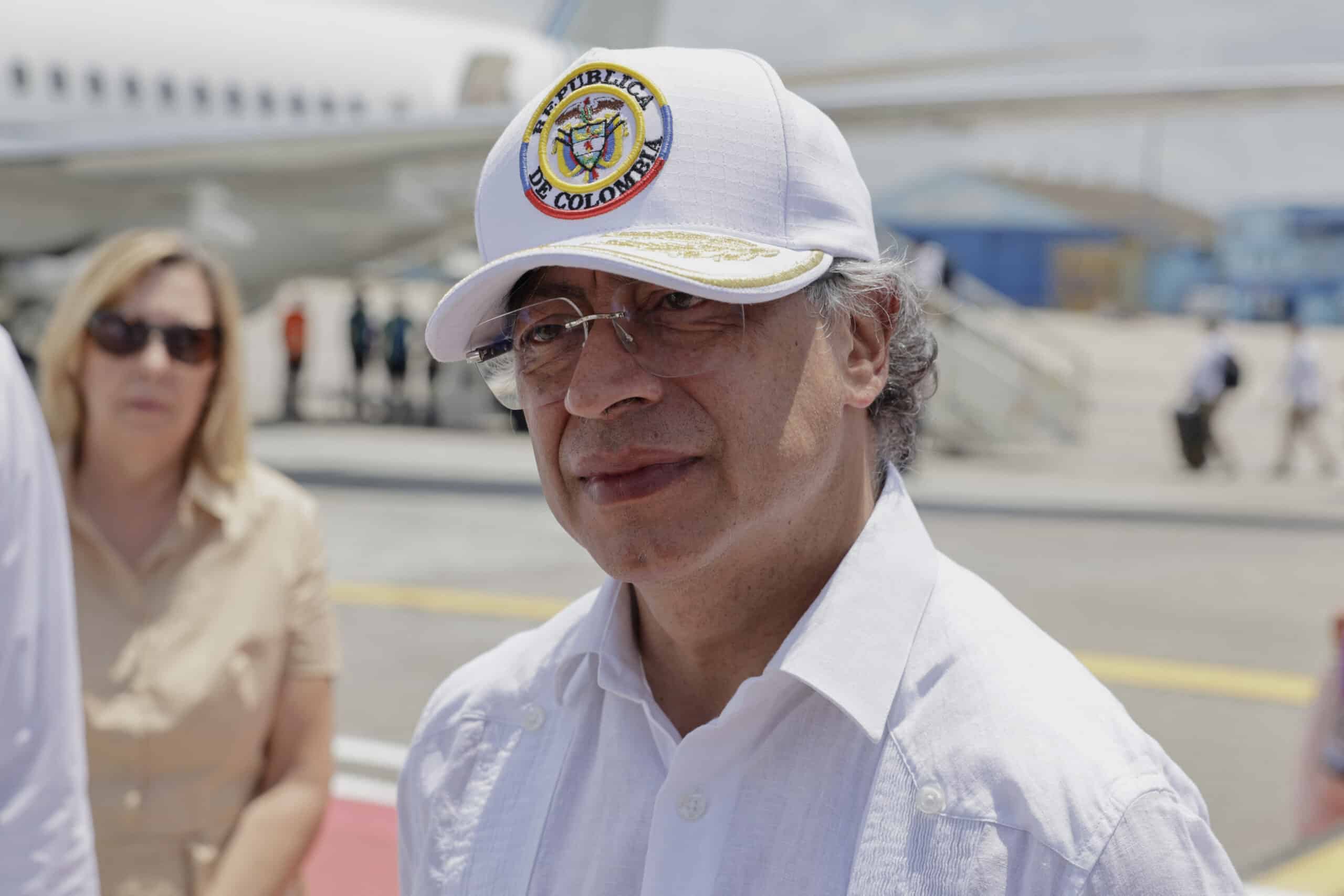
HAVANA — Outgoing Colombian President Gustavo Petro urged the United States to avoid military action against Cuba and pursue dialogue with Havana during an official visit to the island, according to Cuban state media reports published Saturday.
Petro made the appeal during his visit to Havana, where he met Cuban President Miguel Díaz-Canel before leaving office next week.
“I came to call on humanity to show solidarity with Cuba, so that there is no invasion here or missile strike, and to propose dialogue as an alternative, including to the current US government, to (Secretary of State Marco) Rubio and Trump,” Petro said, according to Cuban media.
US President Donald Trump has advocated regime change in Cuba and has described the communist-ruled island as an “extraordinary threat” to US national security. Trump has also said Washington could be “taking Cuba.”
Petro, Colombia’s first leftist president, said the tensions surrounding Cuba should create an opportunity for negotiations rather than military confrontation.
“It would be good if, amid the danger looming over Cuba, it could be transformed from a danger into a setting for that dialogue,” he said.
“Now is the time for dialogue,” Petro added.
Cuban media reported that Petro arrived Friday and received military honors at the Palace of the Revolution before holding official talks with Díaz-Canel. His visit ends Saturday.
Relations between Cuba and the United States have deteriorated since January after Washington imposed an effective oil blockade and additional sanctions against Havana. The measures have worsened economic conditions and contributed to shortages and widespread power outages on the island.
US and Cuban representatives have held talks despite the tensions, but the Cuban government has said the discussions have produced no progress.
Petro’s successor, right-wing politician Abelardo de la Espriella, is scheduled to take office Aug. 7. De la Espriella announced Sunday that his government would sever diplomatic relations with Cuba and Nicaragua, describing both countries as “tyrannies.”
The Cuban government condemned the announcement as an act of “clear subordination” to the United States.
Havana previously hosted peace negotiations that led to the 2016 agreement between Colombia and the Revolutionary Armed Forces of Colombia, or FARC.