
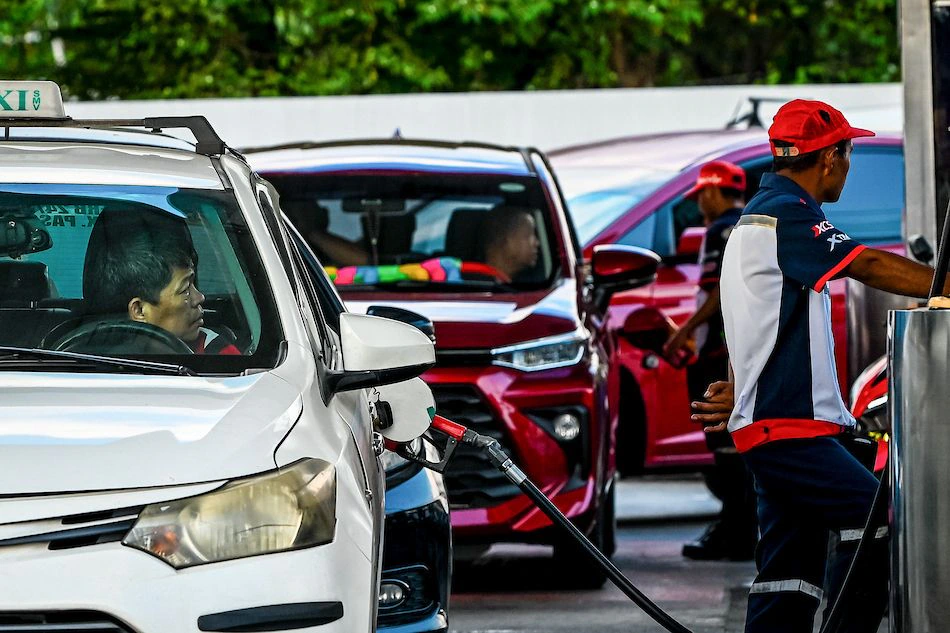
MANILA, Philippines — The House of Representatives of the Philippines approved on third and final reading a bill that would allow Ferdinand Marcos Jr. to suspend the collection of excise taxes on fuel during emergencies.
A total of 247 lawmakers voted in favor of House Bill No. 8418, while three voted against and none abstained during Monday’s plenary session. The measure seeks to amend Section 148 of the National Internal Revenue Code of the Philippines.
If enacted, the bill would authorize the president—upon recommendation from the Development Budget Coordination Committee and the Department of Energy—to suspend the collection of excise taxes on fuel during periods of extraordinary price increases.
The suspension may only be implemented if certain conditions are met, including:
- The average Dubai crude oil price, based on the Mean of Platts Singapore, reaches or exceeds $80 per barrel for at least one month before the suspension order; or
- A state of national emergency or calamity is declared, resulting in extraordinary increases in domestic petroleum prices as certified by the energy secretary.
Excise taxes on fuel are currently set at P6 per liter for diesel and P10 per liter for gasoline and other liquid fuels.
Government officials warned that escalating tensions in the Middle East could further drive up oil prices, particularly if shipping through the Strait of Hormuz is disrupted. According to Rosemarie Edillon, planning undersecretary at the Department of Economy, Planning, and Development, diesel prices could rise to P96 per liter under a worst-case scenario.
If excise taxes are suspended, diesel prices could drop to around P90.04 per liter, while gasoline prices—projected to reach P70.20 per liter—could fall to about P59 per liter, she said.
However, the Department of Finance warned that suspending petroleum excise taxes could reduce government revenues by P136 billion in 2026.
Fuel prices have already surged in recent weeks. Diesel prices in some areas have exceeded P100 per liter, following increases of P17 to P24 per liter, while gasoline rose P7 to P13 per liter and kerosene climbed P32 to P38 per liter.
Industry estimates suggest further price hikes could occur if supply disruptions persist due to tensions involving Iran and shipping through the Strait of Hormuz, where much of the Philippines’ oil supply passes.