
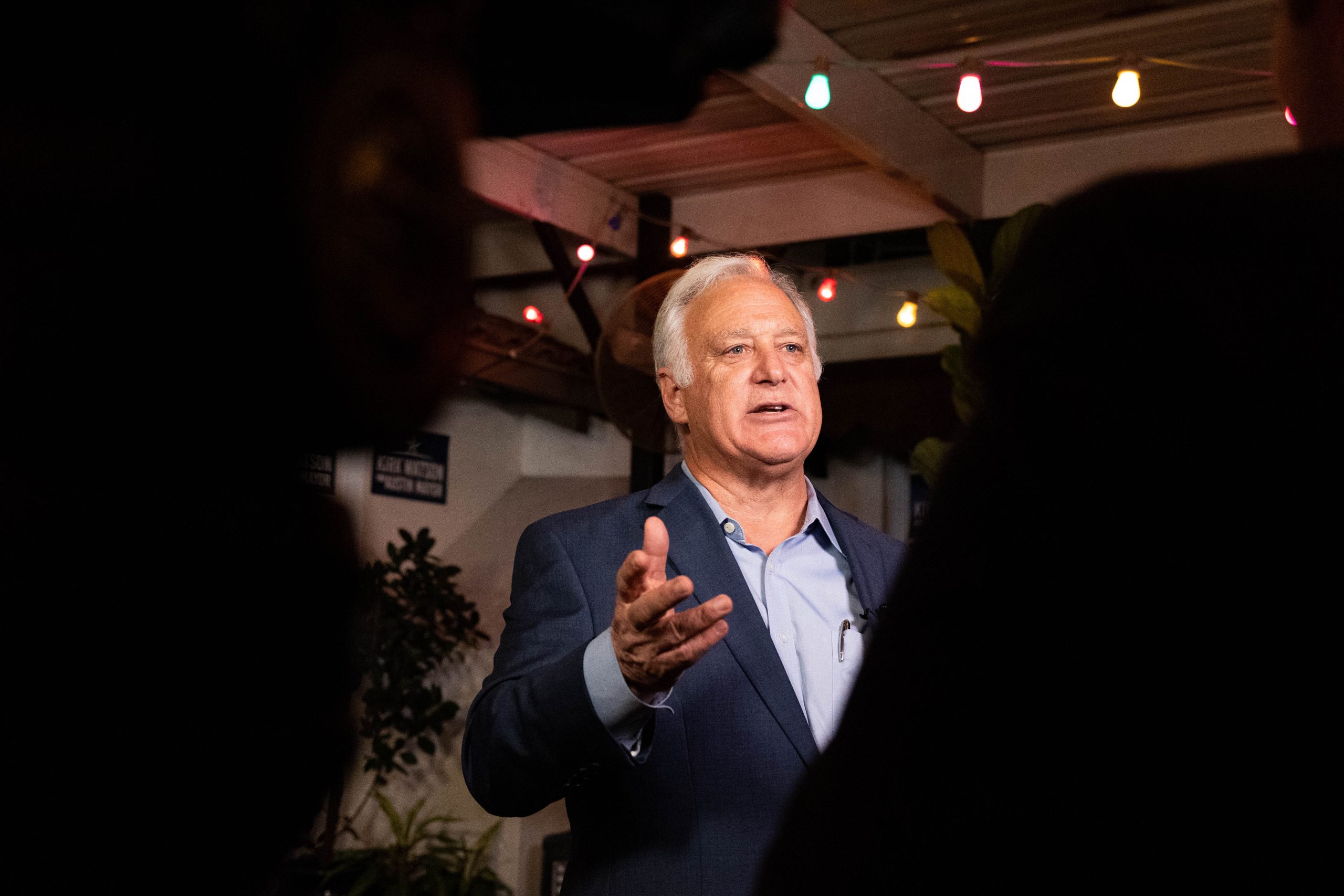
AUSTIN, Texas — Mayor Kirk Watson reflected on Austin’s appeal to young people during a panel at the South by Southwest (SXSW) Conference, emphasizing that affordability and strong collaboration with the University of Texas at Austin are key to keeping the city vibrant.
Watson recalled arriving in Austin over 40 years ago planning to leave but staying because of the city’s culture, creativity, and community. “We have thousands of young people show up in this town…after about three months, say, ‘I never want to leave,’” he said. “But if they can’t afford to live in this town, they will leave or they won’t come here in the first place.”
At the panel titled “Cities and Colleges Powering Innovation, Culture & Community,” Watson joined Knoxville Mayor Indya Kincannon and Tuscaloosa Mayor Walt Maddox to discuss the interplay between cities and large universities. The mayors underscored the “symbiotic” relationship necessary for economic growth, innovation, and cultural vitality.
“Austin wouldn’t be Austin without the University of Texas at Austin. And the University wouldn’t be the University without Austin,” Watson said, noting that the city’s rise as a global economic hub is closely tied to the university.
The panel also addressed challenges such as public safety, infrastructure, and student housing. Watson highlighted the ongoing I-35 cap-and-stitch project and the need for collaboration with UT regarding zoning and development planning, particularly concerning building heights near campus.
Kincannon stressed the importance of “radical collaboration” in Knoxville for public safety and housing, while Maddox highlighted the intensity of ensuring safety at University of Alabama events.
Watson also acknowledged recent tragedy in Austin, referencing the March 1 mass shooting at Buford’s on West 6th Street, where one University of Texas student was killed and over a dozen others were injured. He said one of his first calls after the incident was to UT President Jim Davis, illustrating the critical communication between city leadership and university officials.
The panel further discussed federal funding challenges, including cuts to the I-35 project and the Reconnecting Communities Pilot Grant Program, emphasizing the need for local, state, and federal cooperation to sustain urban growth and opportunity.
Watson concluded by stressing that the city’s future relies on keeping it accessible for young people. “The best way to [keep Austin thriving] is to keep Austin a place where young people can afford to stay here and find their jobs,” he said.
The discussion highlighted Austin’s ongoing balancing act: fostering innovation and economic growth while maintaining the city’s culture and affordability for future generations.