
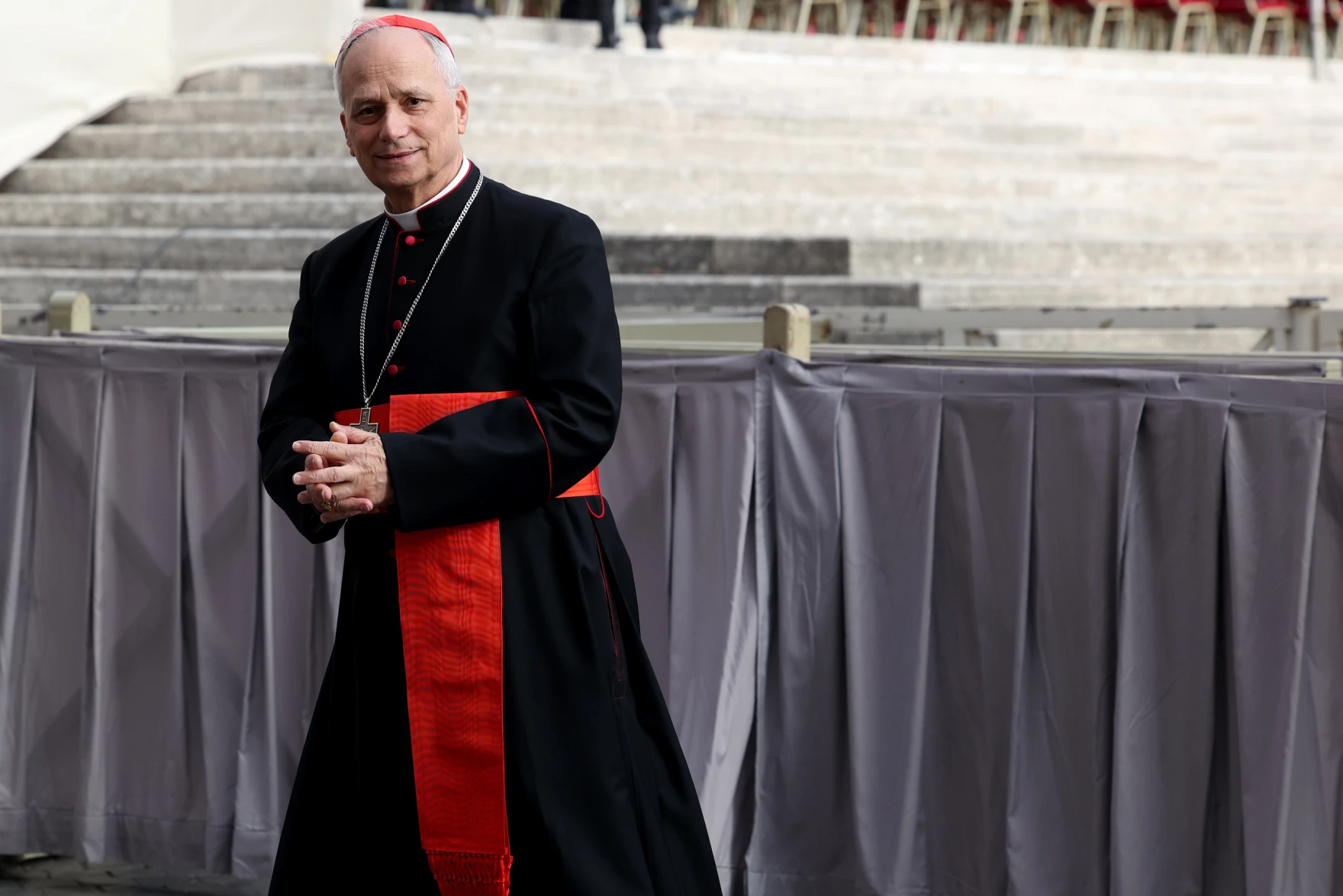
ROME — Cardinal Robert Prevost entered the 2025 conclave without widespread expectations that he would become pope, but conversations among fellow cardinals and longtime friends gradually elevated the American cardinal as a serious contender to succeed Pope Francis.
In the days after Francis died, Prevost received messages from friends who offered condolences and prayers. Father Ramiro Castillo Castro, who studied under Prevost in the 1990s, told him he was praying for him. Prevost responded that everything was in God’s hands.
John Snider, a Lutheran pastor and longtime friend, also sent a message. The two had spent a summer together in Minneapolis before their ordinations, discussing theology and learning how to minister to sick and dying people.
Snider, who was nearing retirement, told Prevost that he faced an intense responsibility as he prepared to participate in the conclave.
“Everything is in God’s hands,” Prevost replied, thanking the Sniders for their friendship and prayers.
Friends began wondering if Prevost could become pope
John Barry, who had known Prevost since high school, also contacted him after Francis’ death. Barry expressed sympathy for Prevost’s personal loss and then raised the possibility that his friend could become pope.
Barry praised Prevost’s compassion and character and jokingly asked whether he could still email him if he became pope.
Prevost replied that he would leave everything in the Lord’s hands. He also assured Barry that they could continue corresponding.
At the time, however, Prevost did not rank among the cardinals widely discussed as “papabile,” a term used for potential papal candidates.
His nationality presented one obstacle. No American had ever become pope, and some cardinals questioned whether the leader of the Catholic Church should come from a country with significant political, economic and military influence.
Cardinal Blase Cupich, archbishop of Chicago, said in an interview with the Chicago Sun-Times that electing an American would represent a difficult choice under those circumstances.
Prevost saw the interview and later told Father John Merkelis that Cupich had said the cardinals would not elect an American.
“I’m sleeping well at night,” Prevost said.
Merkelis shared the comment with Sister Thérèse DelGenio, who had worked with both men decades earlier. She responded with a reminder that Prevost had not accounted for the Holy Spirit.
Cardinals arrive in Rome
Cardinals from around the world arrived in Rome following Francis’ death to mourn the pope and prepare for the conclave.
New York Archbishop Timothy Dolan, one of the most prominent American cardinals and one of the few electors who had taken part in the 2013 conclave, dismissed questions about his own chances with a joke about having a better chance of batting cleanup for the New York Yankees.
Dolan had known many cardinals and served as a highly visible representative of the U.S. Catholic Church. Yet Prevost had not initially attracted his attention.
“I didn’t even think of him as an American,” Dolan later said. “The little bit I knew about him was good — I had heard good things about him. But I had never met the man.”
Other cardinals quickly began asking Dolan about Prevost after he arrived in Rome. They wanted to know about Prevost’s interests, personality and temperament.
Dolan then approached Prevost at a gathering of cardinals and introduced himself.
General Congregations shape the discussion
Beginning the day after Francis’ death, the cardinals held daily General Congregation meetings in an auditorium near St. Peter’s Square.
The meetings lasted for hours as the cardinals discussed the state of the Catholic Church, the challenges facing its next leader and the qualities they wanted in the next pope.
Cardinal Joseph Tobin of New Jersey described some sessions as disorganized but said the discussions repeatedly returned to fundamental questions about what the church and the world needed.
Outside the Vatican, thousands of journalists and religious pilgrims gathered in Rome as interest in the conclave grew.
The 2024 film “Conclave,” based on Robert Harris’ novel, also fueled public interest in the papal election. Prevost had watched the film and discussed it with family and longtime friends, although he rejected comparisons between himself and its fictional characters.
Prevost gains support among cardinals
As the meetings continued, more cardinals began considering Prevost seriously.
Prevost had worked closely with Francis and supported several priorities associated with the previous pope, including synodality, advocacy for immigrants and environmental concerns. His years as a missionary and his extensive work in Peru also gave him strong ties outside the United States.
Some cardinals also saw Prevost as a possible change in leadership style after Francis. Dolan said he wanted a pope who was measured, calm and reliable.
Dolan began researching Prevost’s record and asked a colleague who had worked closely with him for an assessment.
“He runs a good meeting,” the colleague told him.
Dolan initially considered the comment faint praise but later understood it as an indication that Prevost could organize discussions, establish goals and manage responsibilities effectively.
During a coffee break at one General Congregation meeting, Dolan asked an older cardinal who he thought could become pope.
The cardinal pointed toward Prevost.
Cardinals examine Prevost’s experience
The cardinals continued discussing the priorities they wanted the next pope to address, including the church’s response to sexual abuse, Vatican finances, Curia reform, world peace and environmental concerns.
Cardinal Pedro Barreto of Peru, who was 81 and therefore ineligible to vote, saw connections between those priorities and Prevost’s experience.
Prevost had led the Peruvian bishops’ council addressing abuse and had helped address church finances in Peru. His two years in Rome had also given him experience with the Vatican without establishing him as a longtime Curia insider.
Barreto saw Prevost’s background as relevant to the cardinals’ concerns and recognized that his American nationality remained the main obstacle.
Cardinal Joseph Tobin also began considering Prevost as a possible pope. The two had known each other for about three decades and had worked together in Rome and Peru.
One evening, Tobin joined Prevost and other cardinals for prayer and dinner. Before leaving, Tobin told his friend he thought the cardinals might ask him to serve as pope.
Prevost did not argue or try to discourage him. He simply thanked Tobin for his prayers.
Prevost leaves the decision to God
As the May 7 conclave approached, Prevost faced the possibility that the cardinals could elect him to lead the Catholic Church.
He had begun thinking about retirement in recent years. The prospect of becoming pope would instead place him at the center of the Catholic Church and global affairs.
Prevost later recalled taking a deep breath and turning the decision over to God.
“I said, ‘Here we go, Lord. You’re in charge. You lead the way.’”
In New Lenox, Illinois, his brother John Prevost also prayed about the possibility.
John initially dismissed the idea of an American pope but began reconsidering it as reports from Rome continued. Father John Merkelis later told him that Robert’s chances appeared similar to those Jorge Bergoglio faced before the 2013 conclave.
John did not want the attention that could come with becoming the pope’s brother. He also worried that the role would change Robert’s life and end his regular visits home.
John initially prayed that his brother would not become pope. He then changed his prayer, asking that whatever happened would serve the church.
The final preparations
The day before the conclave began, Prevost visited the Augustinian General Curia, where he regularly prayed and shared meals with fellow Augustinians.
He spoke with Father Alejandro Moral Antón, who had succeeded him as the order’s prior general. The two then prayed to the Holy Spirit, asking for guidance as Prevost and the other 132 cardinal electors prepared to enter the Sistine Chapel.
Afterward, Moral Antón told Prevost that he would always be welcome to return to the Augustinian community for meals, Mass and prayer, regardless of the color of his vestments.
The following day, the cardinals entered the Sistine Chapel to begin the conclave that ultimately elected Prevost as Pope Leo XIV, the first American pope.