
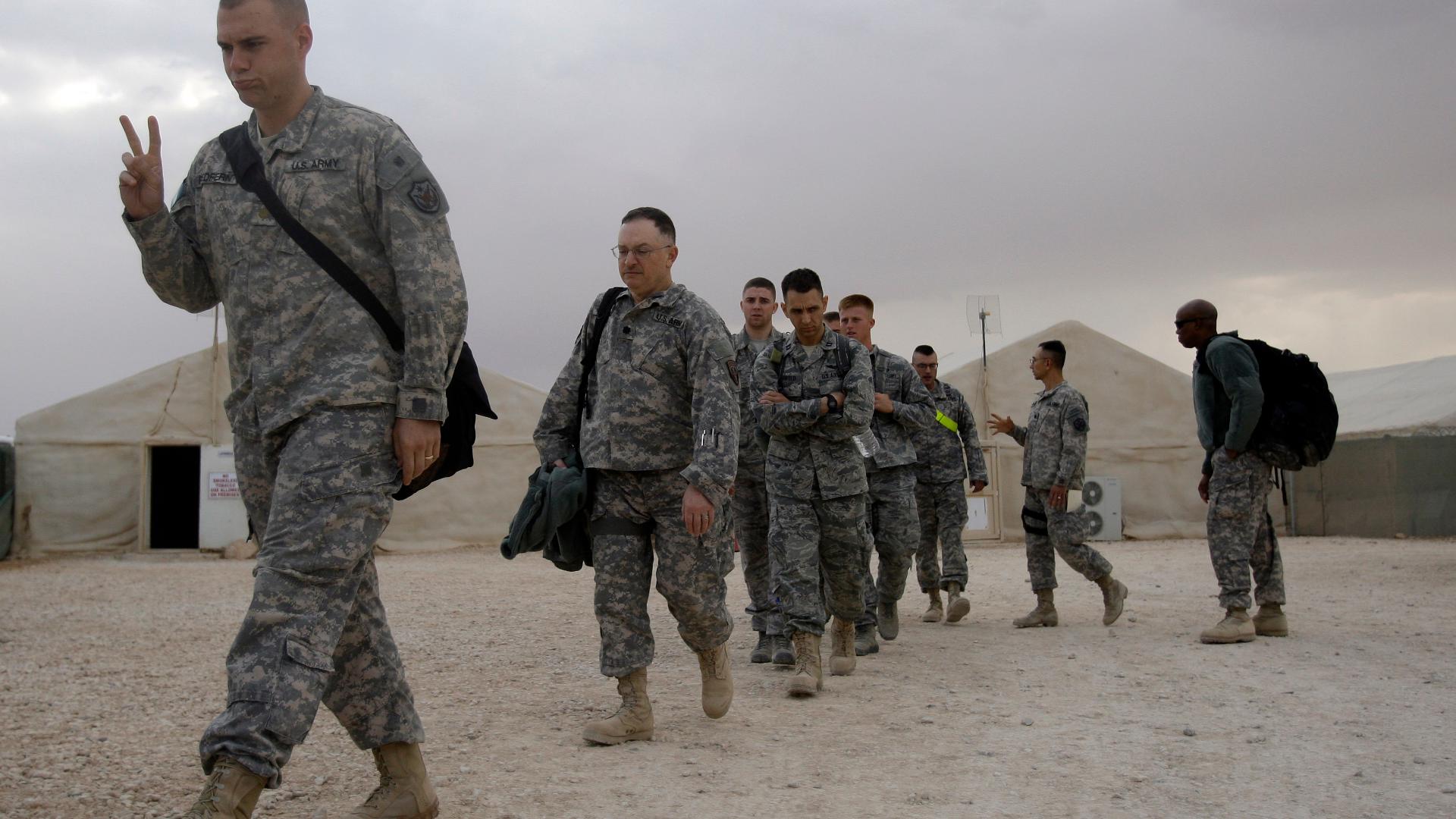
BAGHDAD, Iraq — The United States completed its military withdrawal from Iraq on Wednesday, ending a 12-year mission against the Islamic State group as the last American troops left an air base in the country’s northern Kurdish region.
Pentagon spokesperson Sean Parnell said U.S. troops and equipment completed an “orderly departure” from the air base in Irbil under a 2024 agreement between Washington and Baghdad to end the U.S.-led coalition mission.
Parnell said the withdrawal reflected the completion of a campaign that defeated ISIS as an organized military threat in Iraq and marked the shift toward an Iraqi-led security effort supported through a bilateral security relationship.
Iraqi Prime Minister Ali al-Zaidi presided over a handover ceremony and described the withdrawal as the start of a new phase centered on Iraq’s sovereignty, stronger institutions and security forces, and partnerships with other countries.
Al-Zaidi said Iraqi security forces would continue operations against ISIS and that his government would work to prevent non-state armed groups from retaining weapons.
The United States invaded Iraq in 2003 to remove Saddam Hussein and withdrew its forces in 2011. Baghdad invited a smaller U.S.-led mission back in 2014 after ISIS seized large areas of Iraq.
Washington and Baghdad agreed in 2024 to end the mission as ISIS declined into scattered sleeper cells. U.S. forces left bases across most of Iraq in 2025 but maintained several hundred troops in the northern Kurdish region until Wednesday.
The withdrawal comes amid heightened tensions involving Iran, the United States and armed groups in Iraq. Iran-backed militias have attacked U.S. positions, while U.S. forces have struck militia targets.
Iraqi officials in the Kurdish region have raised concerns about the departure, particularly the removal of U.S. air defense systems. The Kurdish Peshmerga Ministry said the region faced more than 1,000 drone and ballistic-missile attacks during the recent U.S.-Iran conflict.
Iran-aligned groups, meanwhile, welcomed the U.S. departure. Kataib Hezbollah security official Abu Mujahid al-Assaf called the withdrawal the beginning of “full sovereignty” for Iraq and warned the government against pursuing U.S. plans.
The withdrawal also leaves questions about Iraq’s armed groups. Baghdad initially tied the Sept. 30 U.S. withdrawal deadline to the disarmament of non-state militias, but several powerful Iran-aligned groups rejected the prospect or imposed conditions.
Al-Zaidi later moved the disarmament deadline to June 2027, according to an interview with The New York Times earlier this month.