
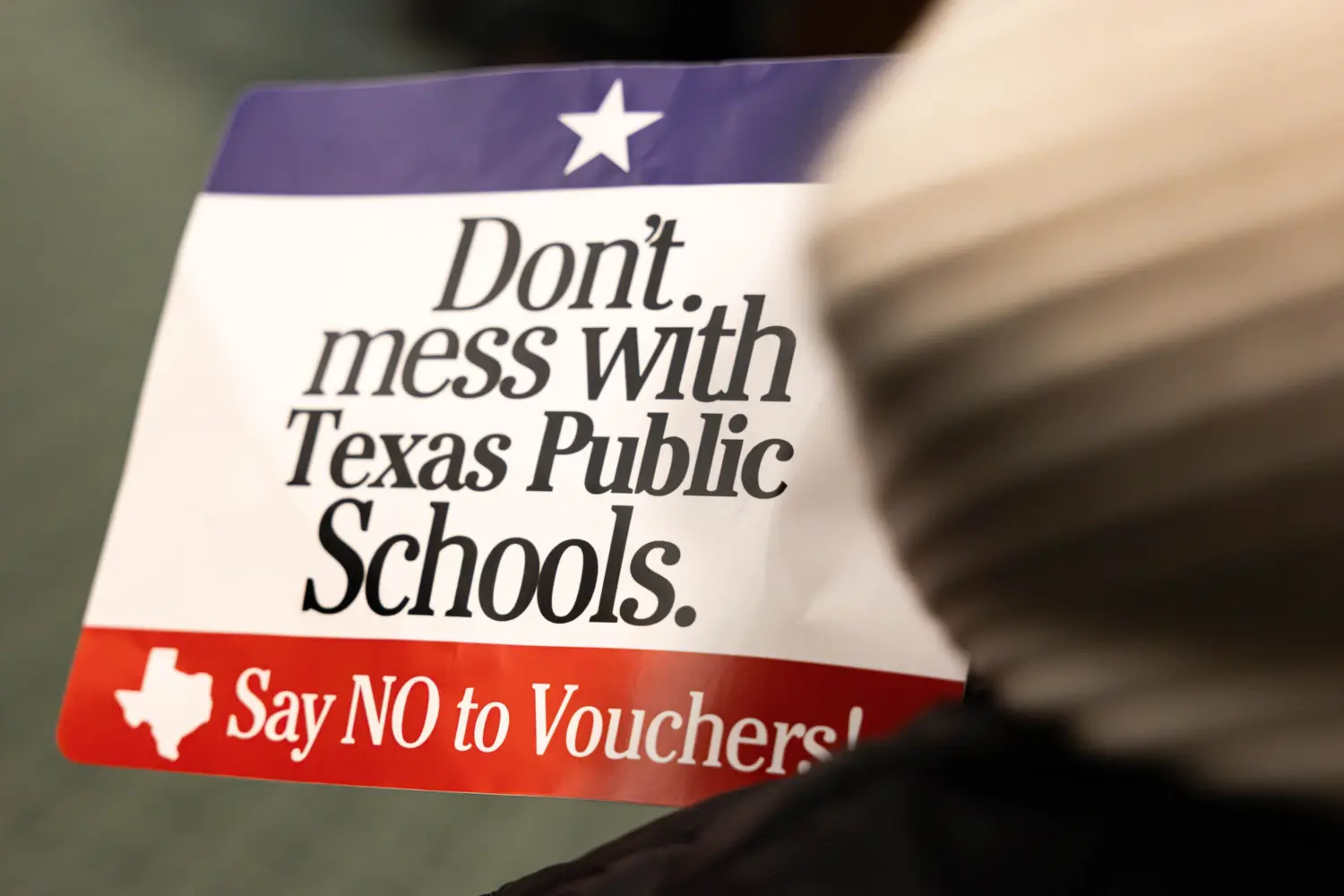
AUSTIN, Texas — Texas Comptroller Don Huffines is asking state lawmakers to increase funding for the state’s private school voucher program from $1 billion to $2 billion as more than 100,000 students remain on the program’s waitlist.
The program, known as Texas Education Freedom Accounts (TEFA), received more than 270,000 applications during its first year. State officials determined about 248,000 applicants were eligible, exceeding the program’s available funding.
Travis Pillow, a spokesperson for the program, told lawmakers during a legislative hearing Wednesday that the comptroller’s office continues to hear from families seeking access to the program.
“This is the longest school choice waitlist in the country,” Pillow said.
Pillow said the program needs an additional $980 million to provide accounts to students on the current waitlist and another $82 million for newly eligible siblings of students already enrolled.
The program also expects up to 4,000 eligible students to move from homeschool vouchers worth about $2,000 to private school vouchers worth roughly $10,000, creating another funding need.
Officials are also preparing for changes to funding for students with special education needs and potential increases in statewide per-student public education funding. TEFA vouchers currently provide 85% of the state’s per-student public education allocation.
The comptroller’s office plans to announce the next voucher application period in the coming weeks.
Pillow described TEFA as the largest and most successful first-year school choice program in U.S. history and the nation’s second-largest education savings account program.
Critics, however, told lawmakers that the state needs more evidence about the program’s effectiveness before increasing its funding.
Dee Carney, director of the Texas Center for Voucher Transparency, an independent watchdog group, urged lawmakers to require a comprehensive evaluation of TEFA. She noted that the comptroller’s funding request does not include money for an evaluation required under state law.
“Before committing billions more, legislators and Texans need to know whether TEFA is delivering on the promises made to taxpayers this school year, not in five years,” Carney said. “Legislators need to look beyond the waitlist and understand who the TEFA voucher program is serving.”
Supporters say the program gives low-income families more educational options. Comptroller data, however, show that about 70% of voucher recipients previously attended private schools or were homeschooled.
More than 3,000 Houston ISD students participate in the program, while the Greater Houston area leads Texas in voucher applications.
Special education remains another area of concern. Private schools do not face the same state and federal requirements as public schools to accept students with disabilities or provide accommodations.
Students who use special education services can qualify for up to $30,000 in vouchers for additional services, but critics have raised concerns about oversight.
Steven Aleman, a policy specialist with Disability Rights Texas, opposed expanding the program and said families still struggle to find private schools that accept students with disabilities and provide needed services.
“There is still a lot of need for data and exploration and examination of the data,” Aleman said. “But from what we are hearing anecdotally from families is they are struggling to find private schools that will accept them, let alone provide special education services or even accommodations.”
TEFA officials are seeking more than $200 million to support an expected 15,000 participating students who may submit new special education documentation next year. About 7,000 students currently attending private schools through the program have documentation indicating a disability.
Aleman said some families have returned their TEFA funds after failing to find suitable resources for children with disabilities.
The program’s budget could exceed $4 billion in the coming years. Carrie Griffiths, executive director of Our Schools Our Democracy, warned that administrative costs could also reach hundreds of millions of dollars.