
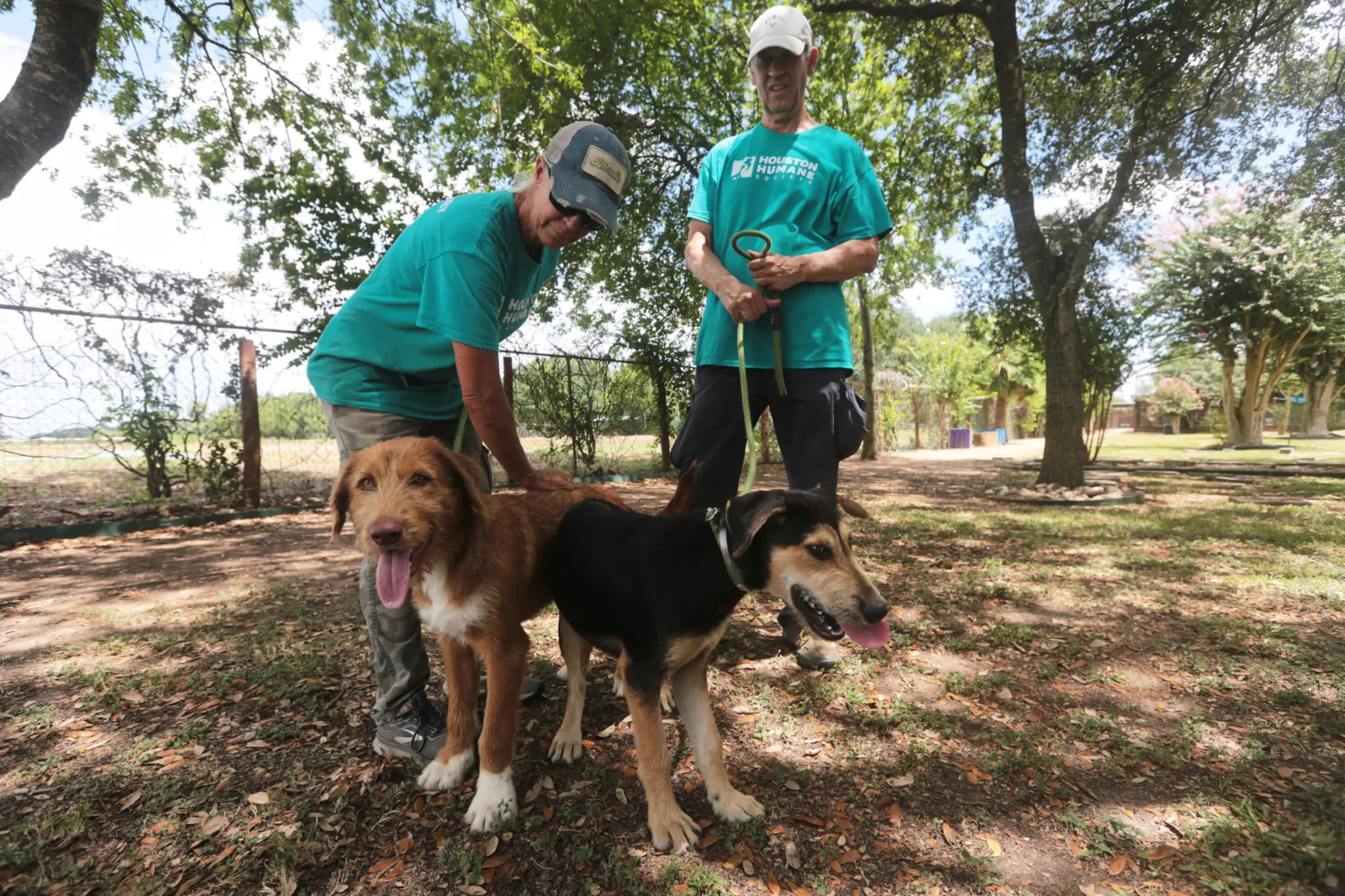
HOUSTON — Thousands of dogs and cats in Texas shelters face longer waits for adoption as restrictions on animal movement aimed at containing the New World screwworm prevent shelters from sending animals to other states.
The flesh-eating parasite, which crossed from Mexico into the United States for the first time in six decades, has prompted federal officials to restrict cattle movement and led dozens of states to tighten rules for animals coming from affected areas of Texas.
The screwworm can infect mammals when flies lay eggs in wounds or mucous membranes. Several dogs have been among dozens of reported infections in southern Texas and southeastern New Mexico.
Forty-four states have restricted pet movements from affected areas, disrupting a transport system that Texas shelters rely on to place animals in homes outside the state.
In Corpus Christi, the Gulf Coast Humane Society saw its animal population rise from about 325 to nearly 450 after New York temporarily stopped accepting rescued dogs from Texas. The shelter normally sends about 500 dogs to other states each year.
New York later resumed accepting Texas dogs if veterinarians certify that the animals do not have screwworm.
Mia Bendixsen, executive director of the Texas Humane Legislation Network, said the restrictions have created challenges for shelters and rescue groups.
“If her shelter doesn’t have space to take animals from municipal shelters, then they have to euthanize more animals,” she said.
Texas already faces a large surplus of dogs and cats needing homes. In 2025, shelters transferred nearly 89,000 unadopted dogs and about 53,000 cats to other states, according to the American Society for the Prevention of Cruelty to Animals.
Texas shelters also euthanized about 45,000 dogs and nearly 29,000 cats that year.
Houston shelters have also felt the impact. Humane Society shelter Director Aaron Grady said keeping animals in crowded facilities increases their stress and can make them less appealing to potential adopters.
The Houston shelter has kept its population at about 200 animals while relying on foster homes for up to 300 additional pets and helping owners keep their animals longer.
States have adopted varying requirements for animals entering from affected areas. Some have banned rescued animals from Texas and New Mexico, while others require veterinary examinations and certifications showing that animals are free of screwworm.
The U.S. Department of Agriculture also is expanding efforts to control the parasite. A $750 million sterile-fly facility under construction in southern Texas is expected to begin operations in April 2027 and produce billions of sterile male flies for release.
Animal welfare advocates said the new restrictions are adding pressure to shelters that already face limited space and funding.
Delcianna Winders, director of the Animal Law and Policy Institute at Vermont Law and Graduate School, said communities can reduce shelter overcrowding through greater access to spaying and neutering services and financial assistance that helps owners keep their pets.
For shelters such as the Gulf Coast Humane Society, interstate transfers have long provided a crucial outlet for animals that otherwise could face euthanasia.
Corpus Christi shelter director said a similar transport once saved her own dog, Zuri, who traveled nearly 1,000 miles from Texas to Indiana in 2015 after landing on a euthanasia list.
“The shelter that I was at in Indiana, we transported from Texas and Southern states every week,” she said.