
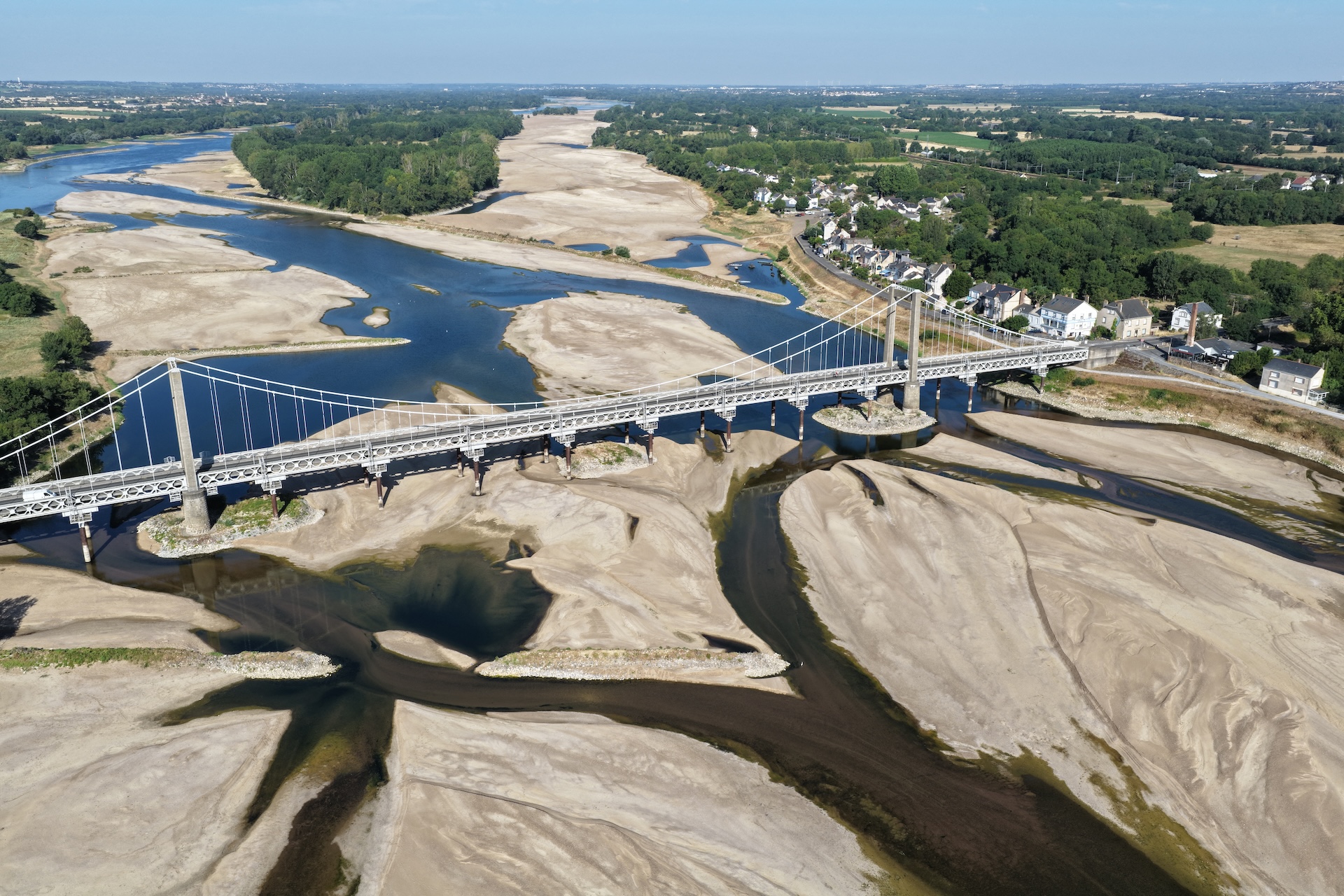
PARIS — Europe is facing another intense heatwave after record drought, wildfires and low river levels affected much of the continent, with Britain, France, Greece and Spain among the countries confronting extreme heat and worsening dry conditions.
Britain and France issued heat warnings Monday as temperatures reached the mid-30s Celsius. Switzerland, Austria, Hungary, Italy and Croatia also faced unusually high temperatures, while firefighters battled new blazes in Greece and Spain.
The latest heatwave follows record drought conditions across mainland France and Switzerland in July, according to data from the European Union’s Copernicus climate observatory.
Nearly 120 million Europeans live in areas where July 2026 recorded the highest temperatures ever measured, according to an analysis of national weather agencies and Copernicus data.
The United Kingdom’s Met Office said the country was entering its fifth hot spell of the summer. Nearly three-quarters of England and all of Wales remain under drought conditions, while more than 27 million people face water-use restrictions.
France also imposed water restrictions across nearly 70% of its territory. Meteo-France forecast temperatures of up to 35 degrees Celsius in the southeast, with hotter conditions expected to spread across the country during the week.
The heat and drought have also increased wildfire risks.
Greece deployed hundreds of firefighters and equipment to a new blaze near Athens on Monday, while a fire northwest of the capital has already burned more than 10,000 hectares of forest.
In southwestern Spain, a fast-growing wildfire forced the evacuation of about 800 people. France and Spain have also faced major wildfires during the summer as dry conditions left vegetation highly flammable.
Copernicus data showed drought affected 95% of mainland France and 99% of Switzerland in July, the highest levels recorded since the European Drought Observatory began collecting data in 2012.
Low water levels have also affected major European rivers. The Rhine in Germany could become unnavigable if levels continue to fall, industry groups warned.
Polish officials said the Vistula River reached its record-low level in Warsaw Monday, just days after it first matched the record.
Low levels along the Danube also raised concerns about nuclear power plants in Hungary and Romania because the facilities rely on river water for cooling.
Previous heatwaves have also caused thousands of deaths. An analysis of national statistics found at least 12,000 excess deaths across nine European countries during a June heatwave, although the figure could increase as more data becomes available.
The latest heatwave comes as Europe continues to experience faster warming than any other continent, with scientists linking the long-term rise in temperatures to human-caused climate change.
A solar eclipse visible across parts of Europe on Wednesday is also expected to draw spectators despite the extreme heat. The eclipse will begin at 7:33 p.m. Central European Summer Time and reach totality at 8:23 p.m.