
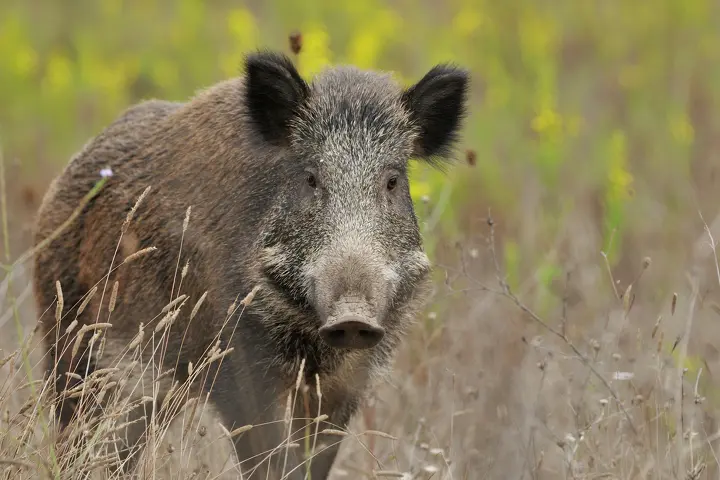
Feral hogs have spread across most of Texas, but experts report that El Paso County does not have an established population, based on current observations and research.
Texas has an estimated 3 million to 4 million feral hogs across 253 counties, according to the Texas A&M Natural Resources Institute. Researchers state that El Paso County remains the only county without a confirmed population, although isolated sightings may occur.
Marcus Blum, an assistant professor and wildlife specialist with Texas A&M AgriLife Extension Service, said researchers have not documented an established group of feral hogs in the county. He said occasional animals could appear, but no verified population exists.
Feral hogs cause an estimated $670 million in agricultural damage each year and add about $200 million in control and mitigation costs, according to the Texas A&M Natural Resources Institute. The animals damage crops, rangeland and hay fields and can spread disease to livestock and wildlife.
Experts attribute the absence of hogs in El Paso County primarily to environmental conditions. Blum said the area’s arid climate and limited water sources reduce habitat suitability for the species. He said feral hogs depend on water and are not adapted to desert environments.
Blum said West Texas generally has lower feral hog densities than other parts of the state. He said populations appear in areas where water and food are available, particularly near agricultural land.
In contrast, East Texas supports larger populations due to higher rainfall, dense vegetation and abundant forage. Feral hogs reproduce quickly, with females capable of breeding at about six months of age and a gestation period of approximately 115 days.
Feral hogs originated from domestic pigs introduced by Spanish explorers in the 1500s. Escaped animals established wild populations that spread across Texas and other regions.
Blum said a permanent population in El Paso County would require sufficient water, food and habitat, along with connections to existing populations. He said development could create conditions that support hogs, but establishment would depend on multiple factors.
Blum said early signs of a population would include damage in areas with water or agriculture, such as green spaces and riparian corridors.
State and federal agencies and private landowners continue to manage feral hog populations across Texas through coordinated control efforts.