
AUSTIN — A judge has sided with the city of Austin in a legal dispute over the expansion of the Austin Convention Center, allowing the multibillion-dollar project to move forward without a public vote.
The lawsuit, filed in December by the Austin United Political Action Committee, was heard in January by Travis County District Judge Jessica Mangrum. Her ruling means voters will not weigh in this May on whether the convention center should be redeveloped. The original facility has already been demolished, and construction on the new center is underway. However, the PAC argues the six-block downtown site could be better used for museums or other cultural spaces.
Bill Bunch, an attorney for the group, said the PAC is exploring an appeal. “The election code does provide for an opportunity to go directly to the Texas Supreme Court on urgent election matters, so we are looking at that option,” Bunch said, adding the group has not abandoned efforts to give residents a chance to vote, whether in May or November.
Austin Mayor Kirk Watson welcomed the decision. “The expansion of our convention center is important to our city’s future,” Watson wrote on X. “It serves as a focal point of our important and thriving tourism industry. I’m pleased that we are looking at a bright future.”
The PAC had begun collecting signatures last February for its “Save the Soul of Austin” petition, which sought to halt the convention center expansion for seven years unless voters approved it. The group needed 20,000 valid signatures to trigger an election and announced in October 2025 that it had met that threshold. Weeks later, City Clerk Erika Brady determined the petition fell short after a random sampling of roughly 25% of signatures — a method allowed under state law. “The city has determined that the convention center petition fails to meet the requirement for the minimum number of signatures of valid voters,” Brady said in November. “Based on an independent, third-party review, the city is highly confident that the number of valid signatures is less than the 20,000 required to place the item on the ballot.”
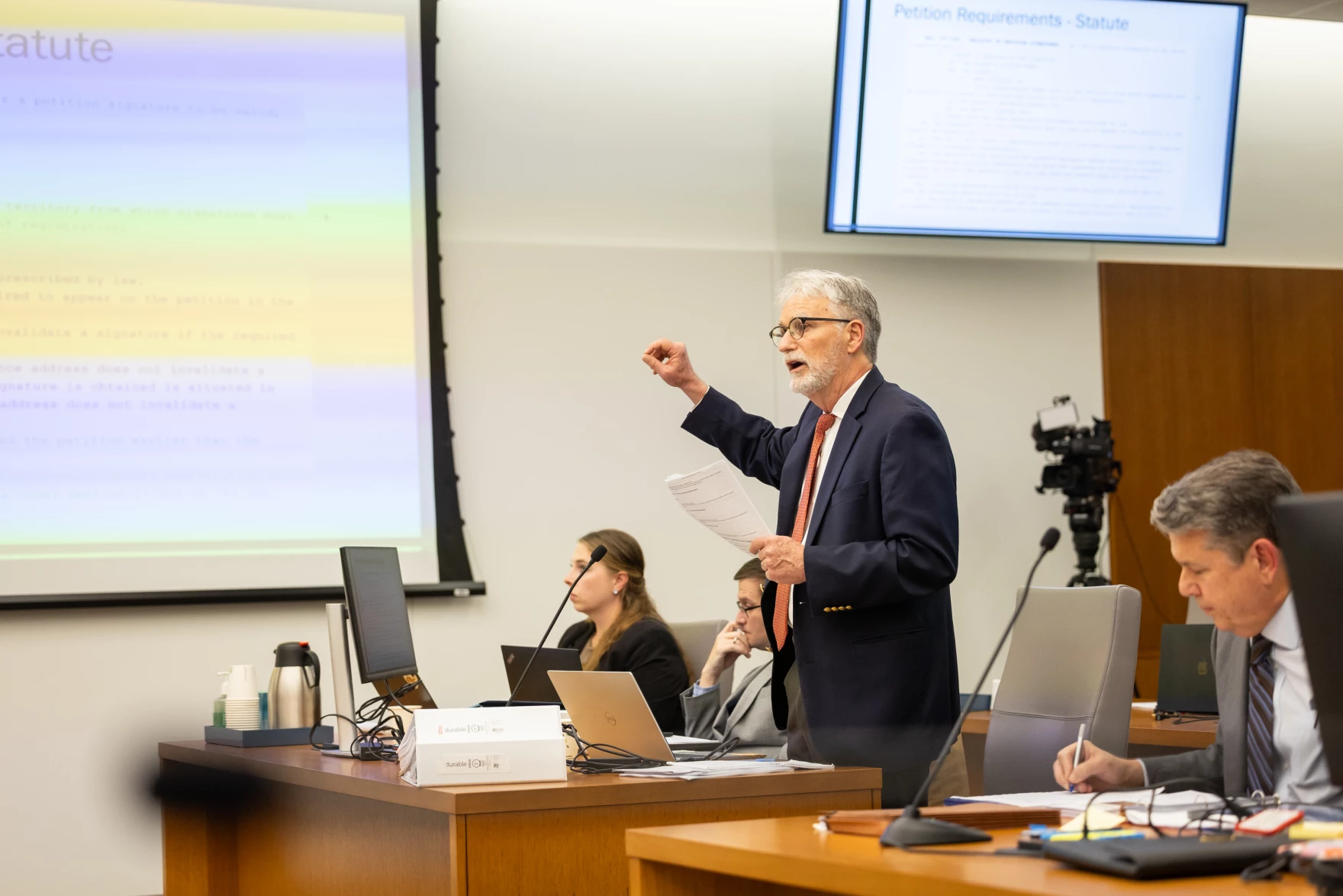
The validity of those signatures became the central issue in the lawsuit. Bobby Levinski, an attorney representing the PAC, argued the clerk improperly disqualified hundreds of signatures from voters living in the city’s limited-purpose and extraterritorial jurisdictions — areas just outside Austin’s full city limits. State election rules allow limited-purpose residents to vote only in city council, recall, or charter amendment elections, while those in the extraterritorial jurisdiction can vote on propositions or charter provisions that affect them. During the trial, a limited-purpose resident testified she had previously been allowed to vote in city proposition elections in 2018 and 2019. Levinski argued the convention center petition should be treated similarly, noting that hotel occupancy tax dollars funding the project can be spent both inside the city and in the extraterritorial jurisdiction. “We have lands in the ETJ that can benefit from investments of these hotel occupancy tax dollars,” Levinski said during closing arguments. He also claimed dozens of signatures were rejected over technical issues.
Deputy City Clerk Stephanie Hall testified that some signatures were likely invalidated because they were missing required information such as an address or date of birth, were illegible, or otherwise failed to meet state requirements. Attorney Paul Trahan, representing the city, argued the clerk followed established procedures and verified every eligible signature. “Of the last 13 petitions submitted to the city clerk’s office going back to 2018, 11 of them have been verified,” Trahan said. “So it’s not like the city clerk’s office is looking to shoot down these petitions.” Trahan maintained that extraterritorial voters do not qualify because the petition does not concern an ordinance that directly applies to them.
The convention center renovation is expected to cost about $1.6 billion and will expand the facility to attract larger events and conferences. The project is funded through hotel occupancy taxes, which by law must be used for tourism-related purposes. Construction is scheduled to continue through 2028, with the new convention center expected to open in 2029 in time for the city’s spring festival season.