
Airlines in the United States canceled or delayed more than 16,000 flights on Thursday as a powerful winter storm moved across large parts of the country and disrupted air travel ahead of expected heavy snow, ice, and strong winds.
The Federal Aviation Administration reported that major airports in the Midwest, Northeast, and parts of the South began to see significant operational impacts as the storm system advanced.
Airlines adjusted schedules, grounded aircraft, and re-routed crews as weather forecasts showed hazardous conditions stretching across multiple states and affecting major travel corridors.
Chicago O’Hare International Airport and Chicago Midway International Airport reported some of the highest numbers of cancellations and delays due to heavy snow and low visibility in the region.
Airports serving New York City, including John F. Kennedy International Airport, LaGuardia Airport, and Newark Liberty International Airport, also reported growing disruptions as the storm pushed east.
Dallas-Fort Worth International Airport and Dallas Love Field reported delays and cancellations as the system’s cold front and associated precipitation affected operations in North Texas.
Airlines cited safety concerns for passengers, crew, and ground staff as the primary reason for preemptive schedule cuts and operational changes.
Meteorologists with the National Weather Service stated that the storm system covered roughly half of the continental United States with a mix of snow, sleet, rain, and freezing rain.
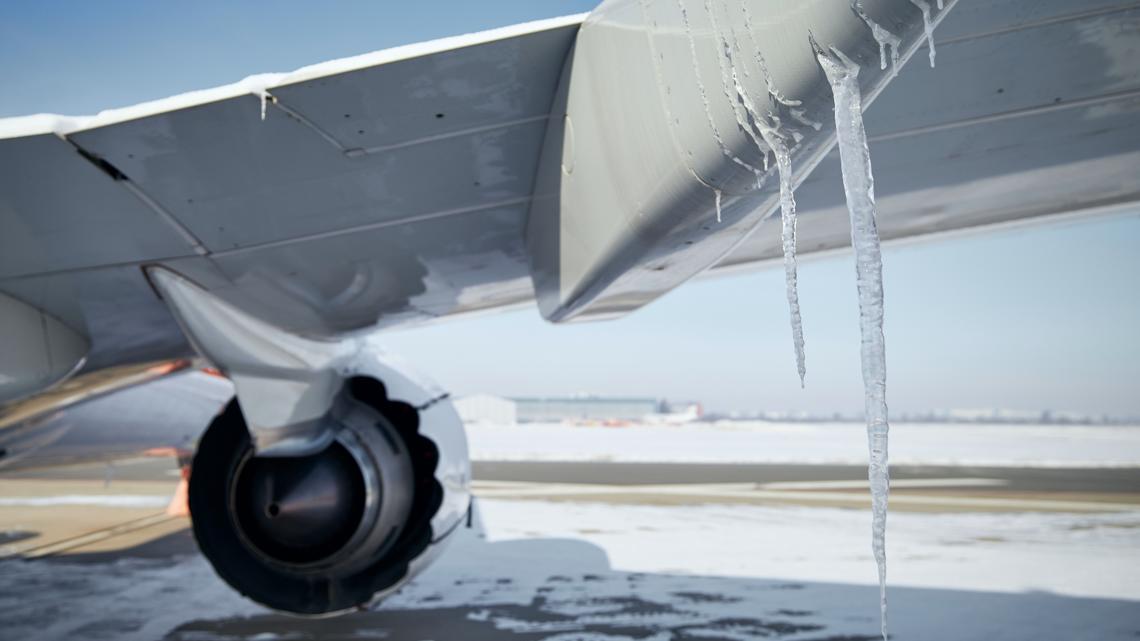
Weather forecasts indicated that some areas could receive several inches of snow while others could see significant ice accumulation that could affect runways, taxiways, and de-icing operations.
Airport authorities deployed snowplows, de-icing trucks, and additional ground crews to keep runways and taxiways clear where conditions allowed safe operations.
Many airports activated emergency and winter weather response plans that included continuous runway checks, coordination with air traffic control, and close monitoring of changing weather patterns.
Some travelers reported long lines at ticket counters and customer service desks as they sought new flight options or refunds after receiving cancellation notifications from airlines.
Digital boards at several major hubs showed waves of red and yellow alerts as airlines updated departure and arrival times throughout the day.
Airlines used text messages, emails, mobile applications, and social media platforms to notify passengers of schedule changes and provide rebooking options.
The Transportation Security Administration reported fluctuating security checkpoint volumes as some passengers chose to stay home or delay travel in response to the storm.
Ground transportation at affected airports also experienced delays as snow and ice slowed road traffic and limited the availability of taxis, rideshare vehicles, and airport shuttles.
Some airports advised passengers to arrive earlier than usual to allow more time for check-in, security screening, and potential weather-related slowdowns.
Air traffic controllers adjusted flight paths and spacing between aircraft in regions with reduced visibility and strong winds to maintain safety standards.
The FAA issued ground delay programs and, in some cases, ground stops at the most affected airports when weather conditions temporarily prevented safe takeoffs and landings.
Airline operations centers monitored radar, wind speeds, runway conditions, and crew duty limits to determine which flights could operate and which required cancellation.
Utility companies in some regions prepared for possible power outages that could affect airport terminals, navigation equipment, and surrounding transportation infrastructure.
Emergency management agencies in affected states issued advisories urging residents to limit non-essential travel on roads and to monitor local weather alerts.
Airlines indicated that full recovery of normal flight schedules could take more than one day after the storm exits heavily affected regions, due to the need to reposition aircraft and crews and clear backlogs of passengers.
Meteorologists and aviation officials continued to coordinate as the storm progressed in order to update forecasts, adjust flight plans, and manage the impact on the national airspace system.